
Beyond Toronto: Mapping the Asian Grocery Network Across the GTA
Beyond Toronto’s city limits, Asian grocery stores have expanded across the Greater Toronto Area, reflecting how communities in Markham, Richmond Hill, Mississauga, Ajax, Oakville, and Milton continue to shape a growing regional food network.

If the previous article, “Toronto Asian Grocery Map: Behind Grocery Shopping Lies an Entire Urban System,” explored the inner structure of Toronto itself, then this second part zooms out to reveal a much larger picture.
 Effie Wu
Previous Posts
For many newcomers to Canada, Toronto is often the first introduction to Asian grocery stores. But for long-term residents across the Greater Toronto Area (GTA), daily life is no longer confined to the city core.
Over the past decade, population movement, housing development, and expanding transportation networks have gradually reshaped where people live. As more Chinese and Asian families settle in Markham, Richmond Hill, Vaughan, Mississauga, Ajax, Oakville, and Milton, Asian grocery stores have followed the same path—evolving from isolated retailers into a connected regional retail network.
A grocery map of Toronto tells us how one city functions. But a grocery map of the entire GTA reveals something more profound: how an entire metropolitan region adapts to changing communities.
When Highway 7 Becomes More Than Just a Road
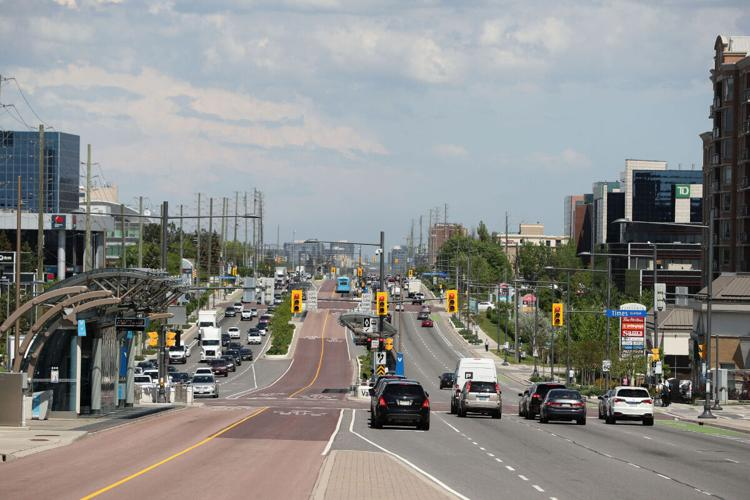
Looking at the distribution of Asian grocery stores across the GTA, one pattern immediately stands out: York Region has developed a highly concentrated retail corridor along Highway 7.
Stretching from Markham through Richmond Hill and into Vaughan, this corridor is not just a collection of supermarkets—it is a fully formed Asian commercial ecosystem. Along this stretch, grocery stores, restaurants, plazas, clinics, banks, and daily services are tightly integrated into one continuous lifestyle network.
Here, Asian supermarkets such as Foody Mart, FreshWay Foodmart, T&T Supermarket, and H Mart each serve slightly different needs. Some households focus on fresh seafood and produce, others on prepared foods and imported goods, while many combine grocery shopping with weekly errands in a single trip.
Compared to Toronto’s urban core, York Region reflects a distinctly suburban lifestyle pattern: larger retail plazas, abundant parking, and a “one-stop weekly shopping” model.
For many families, a weekend trip along Highway 7 is not just grocery shopping—it is part of a long-established routine that defines suburban living.
The East: Durham Region Building Its Own Grocery Network

While York Region represents a mature ecosystem, Durham Region is still in the process of forming its own.
In the past, residents in Pickering, Ajax, and Whitby often had to travel west to Scarborough or Markham for a full Asian grocery shopping experience. Grocery trips frequently meant crossing municipal boundaries.
Today, that pattern is gradually changing.
Stores such as Blue Sky Supermarket and Pacific Fresh Food Market in Pickering, along with Bestco Fresh Foods in Ajax, have become important local destinations for Asian groceries. These stores are not only convenient alternatives—they are markers of a growing local demand base.
From GoFlyer’s weekly flyer coverage, it is clear that more Asian supermarkets are now actively serving Durham Region. This shift reflects a deeper change: local communities are now large and stable enough to support their own retail infrastructure.
What was once a “cross-city shopping trip” is becoming a “neighbourhood routine.”
The West: Where Asian Food Becomes Everyday Consumption
In contrast to the more concentrated Chinese communities in York Region, the western GTA presents a more diverse and multicultural Asian retail landscape.
Mississauga, Oakville, and Milton have all experienced steady population growth driven by new immigrant families and younger households. As a result, Asian grocery stores here serve not only Chinese communities but also Korean, South Asian, Filipino, and Southeast Asian populations.
In Mississauga, Nations Fresh Foods, Oceans Fresh Food Market, and Grant's Foodmart have become major destinations for Asian groceries, offering a wide range of products that reflect the region’s cultural diversity.
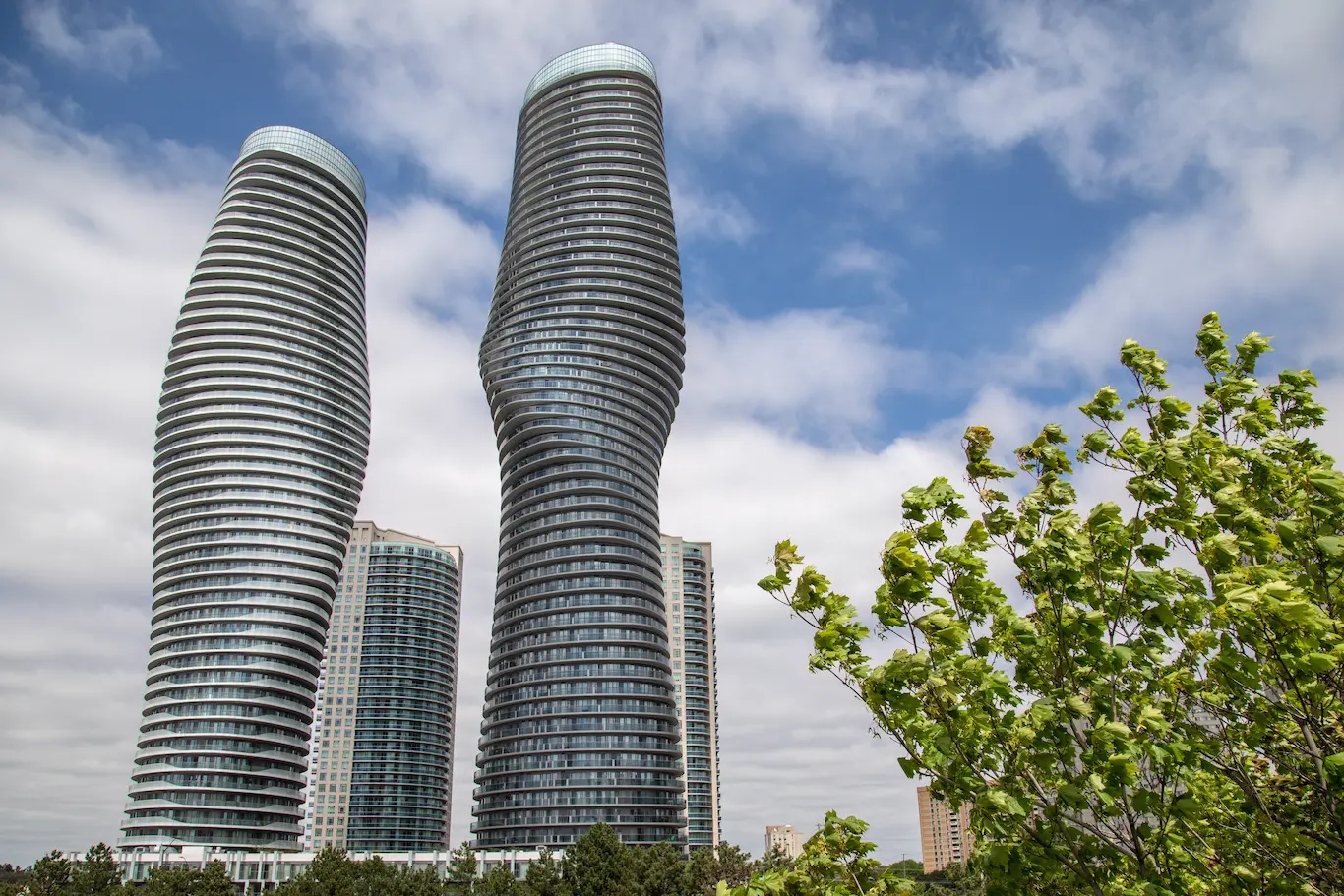
Further west in Oakville, Nations Fresh Foods and Galleria Supermarket provide residents with access to a broad selection of Asian products, while in rapidly growing Milton, Ethnic Supermarket serves an expanding suburban population.
Rather than being “ethnic niche stores,” Asian supermarkets in this region are increasingly becoming part of mainstream suburban retail.
Flyers as a Living Map of the City
For most consumers, a flyer simply represents weekly promotions and discounts.
But from GoFlyer’s perspective, flyers function as something far more dynamic: a constantly updating map of urban change.

As more Asian supermarkets expand beyond Toronto into York, Durham, Peel, and Halton Regions, flyers collectively reveal where communities are growing, where demand is increasing, and where new retail ecosystems are forming.
Each flyer reflects a single week of pricing and deals. But together, thousands of flyers over time trace the evolution of an entire metropolitan region.
They show where families are moving, where new commercial centres are emerging, and how Asian food has become an increasingly integrated part of everyday life across the GTA.
Beyond Toronto, a Connected Regional Food System
The grocery map of Toronto alone tells only part of the story.
When extended across the GTA, it becomes clear that Asian grocery stores are not isolated businesses—they are part of a broader regional system that evolves alongside its communities.
From Markham to Ajax, from Mississauga to Oakville, these stores connect not only shopping routes, but also households, neighbourhoods, and everyday routines.
For GoFlyer, each weekly flyer is more than just a list of deals. It is a snapshot of a constantly shifting urban landscape—one that continues to expand as new communities take shape across the GTA.
The next time you browse a flyer on GoFlyer, you may not just be looking at prices. You may be looking at the quiet expansion of an entire region’s way of life.