
Toronto Asian Grocery Map: Behind Grocery Shopping Lies an Entire Urban System
From a Grocery Map to Urban Structure: Understanding Chinese Life in Toronto
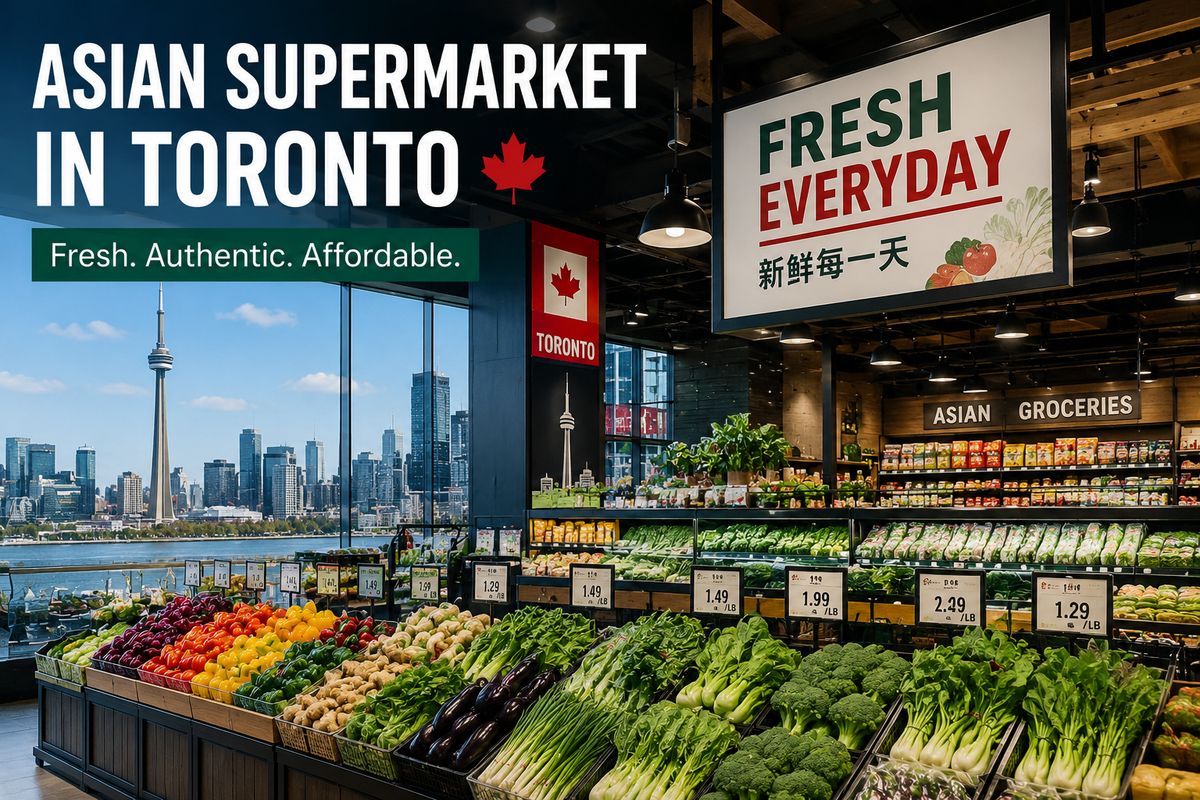
From a Grocery Map to Urban Structure: Understanding Chinese Life in Toronto
If you search “Chinese supermarkets in Toronto” on Google Maps, you’ll notice something interesting right away:
what you get is not just a list of stores, but a kind of urban life map.
North York appears dense, Scarborough spreads wide, Downtown Chinatown interweaves tightly, and Etobicoke plus the west end fill in the gaps.
These supermarkets are not randomly placed. They grow organically along Chinese communities, immigrant households, commuting routes, dining habits, and weekend shopping patterns—layer by layer over time.
In Toronto, going to a Chinese supermarket looks like a simple choice of “which store to go to.”
But at a deeper level, it’s actually an entry point into a long-established urban system.
Different regions of Chinese supermarkets are not serving the same people, nor the same shopping scenarios.
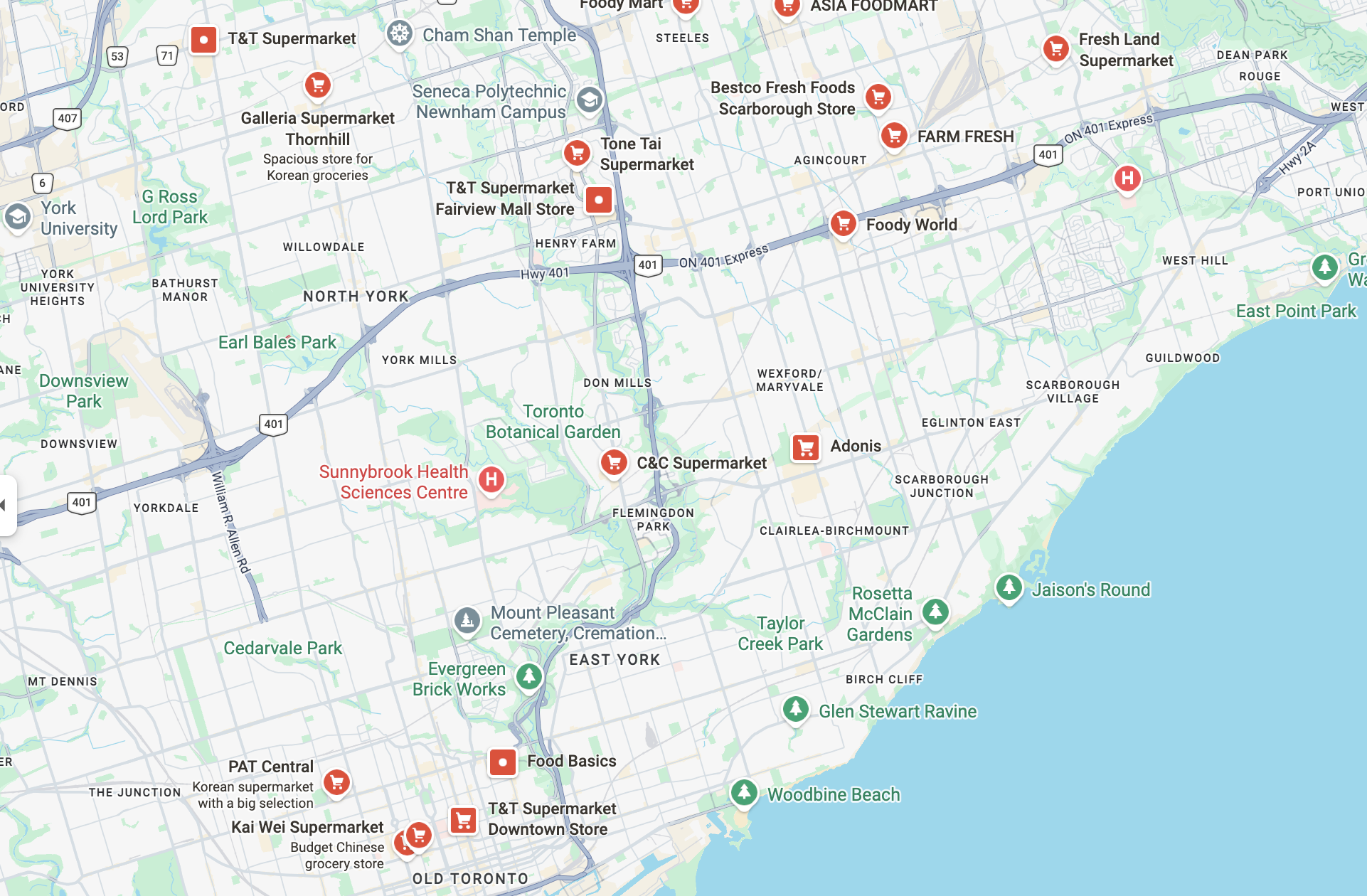
North York: The Most Mature Chinese Grocery Ecosystem
North York is probably the most “systemized” Chinese grocery region in Toronto.

What stands out here is not a single dominant store, but the coexistence of multiple retail systems: large chains, community supermarkets, pan-Asian grocery stores, prepared food sections, household goods areas, and weekend family-stock-up trips—all layered together.
T&T Supermarket is the most representative standardized chain in this system.
Its advantage is not only product variety, but also consistency in store layout, shopping flow, prepared foods, bakery offerings, brand experience, and overall family shopping convenience. For many Chinese households, T&T feels like a “safe default”—you can get most things without overthinking.
At the same time, stores like Tone Tai, C&C, and Superking represent a different logic of Chinese retail:
more locally embedded, more price-sensitive, more focused on fresh produce, Asian product mixes, prepared foods, and weekly promotions driven by loyal customers.
There are also many community-based supermarkets such as Ample, BTrust, and Sunny Foodmart. They may not aim to be the largest or most standardized, but they play a crucial role in everyday replenishment—buying vegetables, meat, seafood, and quick household needs.
So in North York, one thing becomes very clear:
Chinese supermarkets do not exist in isolation. They cluster, compete, and complement each other, forming a mature ecosystem.
This area mainly serves households living in North York, Markham, Richmond Hill (south), and those frequently moving along Sheppard, Don Mills, Yonge, Finch, and Steeles corridors.
Scarborough: The Most Intense Battlefield of Price, Variety, and Flyer Competition
If North York is a mature system, Scarborough is a high-intensity competitive market.
Here, Chinese supermarkets are dense, the customer base is broad, and price sensitivity is significantly higher. Many households don’t just “buy casually”—they actively compare flyers to decide which store has cheaper vegetables, better meat deals, fresher seafood, or better bulk discounts this week.

The Foody system is highly representative here, including Foody World, Foody Mart, and Asia Food Mart, forming a high-volume, high-promotion-frequency, high-traffic weekend shopping environment.
Alongside this, large and regional brands such as Bestco, Freshland, and AI Premium Food Mart further intensify competition in both pricing and assortment, while smaller community stores continue to exist through convenience and loyal customer bases.
The key feature of Scarborough is choice—lots of it—and rapid price fluctuation between competitors.
Flyer culture is especially strong here. Many families don’t decide what to buy in-store; they already complete a “pricing decision process” before leaving home:
Which chicken legs are on sale, which lobster deal is better, which fruits are discounted, which rice or oil promotion is most worth it.
Scarborough is therefore not only a shopping location—it is a consumption pathway shaped in advance by flyers.
From GoFlyer’s perspective, this is where it becomes most visible how pricing information directly reshapes household shopping routes.
Downtown / Chinatown: The Earliest, Densest, and Most Street-Integrated Retail Network
If North York represents systemization and Scarborough represents competition, Chinatown represents the earliest form of Chinese retail in Toronto.
Stores here are smaller, but the density is high, the pace is fast, and the street-level integration is strong.
Shops like Kai Wei, Hua Sheng, and Lucky Moose, together with restaurants, barbecue shops, herbal stores, tea cafés, and general groceries, form a traditional Chinese street-based consumption network.
Shopping here is often not a “weekly stock-up trip.” Instead, it follows a different logic:
- stopping by after work to grab something quick
- buying fruit or vegetables before or after a meal
- picking up discounted items on the spot
- spontaneous, small-volume purchases
Residents, students, seniors, and restaurant workers all interact with this system in different ways.
The advantage of Chinatown is not parking convenience or modern retail design.
It is density, immediacy, price sensitivity, and familiarity.
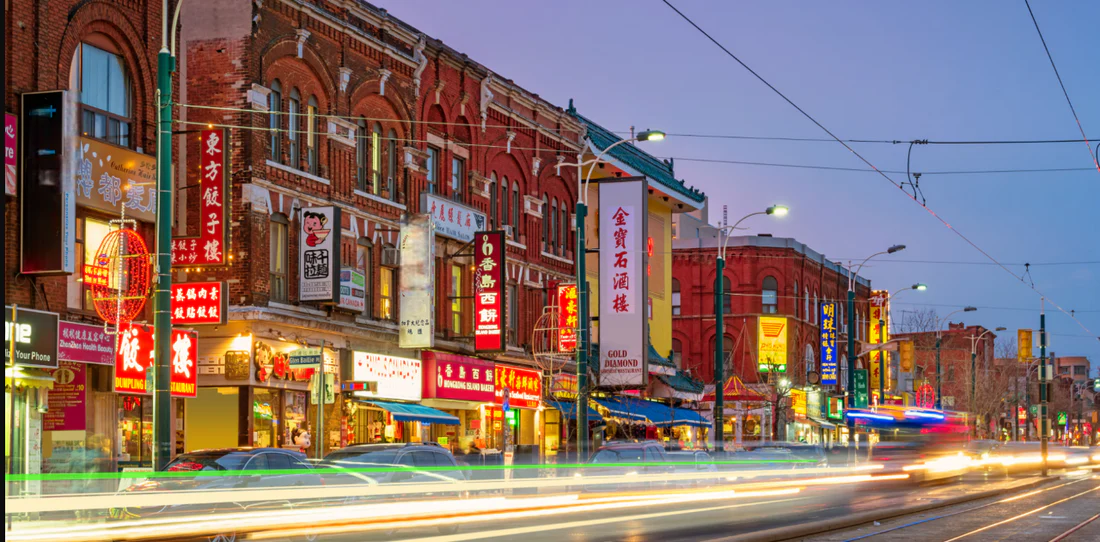
Retail here feels like part of the urban fabric itself. You are not visiting a supermarket—you are stepping into a long-standing Chinese urban street ecosystem.
West Toronto / Etobicoke: A Stable and Diverse Family Stock-Up Zone
Compared to North York and Scarborough, Etobicoke has fewer Asian supermarkets, but it still hosts important grocery hubs serving family-oriented shopping needs.
In addition to community stores like Fresh Value and Ample Food Market, chains such as Bestco Food Mart, Sunny Foodmart, and Nations Experience have become important destinations for West Toronto residents.
The defining feature here is diversity. These supermarkets carry not only Chinese and Asian products, but also South Asian, Middle Eastern, Caribbean, and European goods.

For households in Etobicoke, Mississauga East, and southern Vaughan, this area functions as a one-stop replenishment zone—where a full week’s groceries and household items can be purchased in a single trip.
While West Toronto supermarkets may not always have the highest visibility, they play a stable and essential role in everyday family consumption through consistent pricing and broad product variety.
If You Place All Chinese Supermarkets on a Map of Toronto
A clear structure emerges:
North York: System Core
Most mature combination of chains, community stores, and Asian grocery networks—ideal for stable family shopping.
Scarborough: Price Competition Core
Dense supermarket clusters where flyers and promotions heavily shape weekend shopping behavior.
Downtown Chinatown: High-Frequency Street Network
Compact, fast-moving, walkable consumption ecosystem rooted in traditional Chinese urban life.
Etobicoke / West Toronto: Family Value Stock-Up Zone
More dispersed, but essential for bulk shopping and multicultural household needs.
GoFlyer Perspective: Supermarkets Sell More Than Goods—They Shape Decisions
From GoFlyer’s perspective, what makes Chinese supermarkets interesting is not just where they are, but how they influence what people buy next.
Every flyer is a pre-designed shopping route.
Every front-page promotion is a competition for attention.
Every prepared food counter, seafood display, or stacked produce pile subtly encourages: “you could buy a little more today.”
People often think they are choosing which supermarket to go to.
But in reality, many decisions are already influenced long before that—when they see a flyer, scroll social media, receive a WeChat image, pass by a mall, or remember a deal.
This is what makes Toronto’s Chinese supermarket ecosystem unique:
it is not just retail infrastructure, but part of a broader way of life in the Chinese community.

Conclusion: A City’s Chinese Life Is Connected Through Its Supermarkets
On the surface, Chinese supermarkets in Toronto are simply places to buy groceries.
But when you place them on a map, they reveal something larger:
- weekend routes of immigrant families
- daily routines of seniors and students
- restocking habits of restaurants and small businesses
- shifts in community demographics
- regional differences in spending power
- and generations of evolving expectations around freshness, price, familiarity, and convenience
So when you search “Chinese supermarkets in Toronto,” you are not just seeing store listings.
You are seeing how a city’s Chinese way of life has been gradually shaped by a retail network.
And this system has been built layer by layer over decades.