
GoFlyer Grocery Insights | From Gut Feel to Numbers You Can See
Every grocery manager knows what sells, but data reveals what shoppers want before they buy. Discover how GoFlyer turns customer insights into smarter decisions, better inventory planning, and less waste.

Every department manager has a sense of what's selling. Having a sense and having the numbers are two different things.
Understanding grocery retail through data. Discovering opportunities through insight.
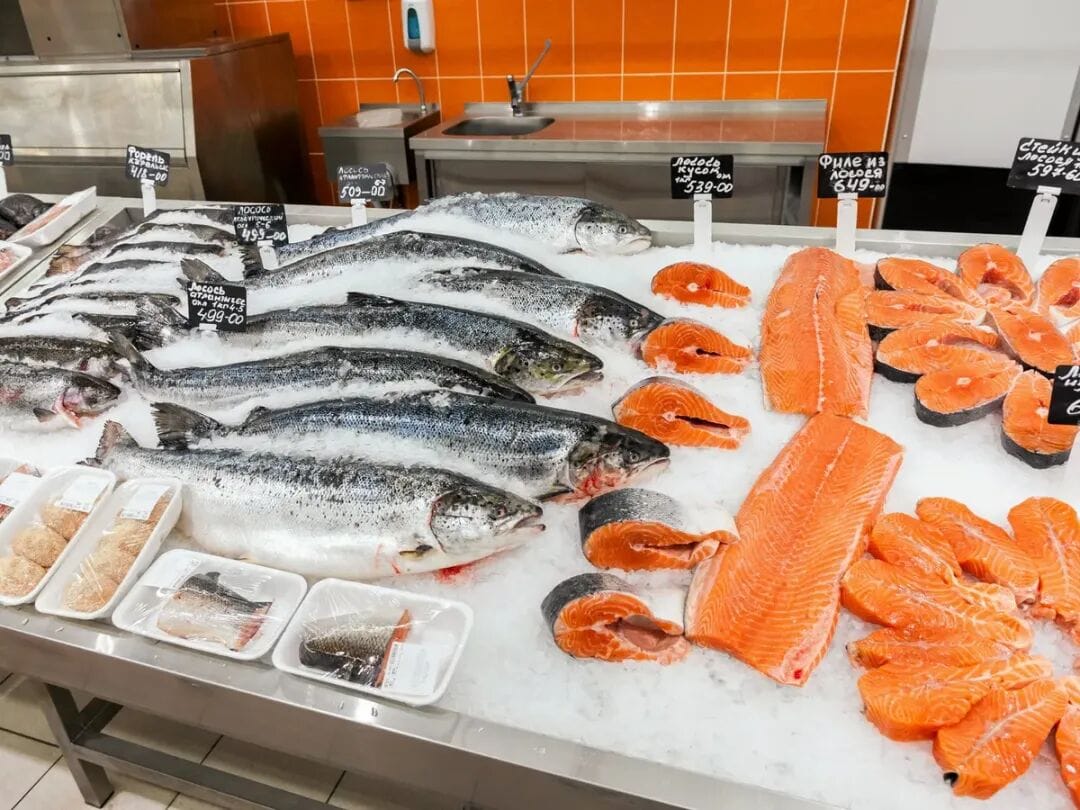
Last time, we followed a case of salmon through its seven days in the store. At the review, the fish manager said something simple: "Let's look, then adjust."
This time, let's talk about that "look." What are managers actually looking at, and how?
Everyone looks. Just differently.
At larger stores, the owner pulls the department managers together on Monday morning. They go through the reports: how each department did last week, and how that compares with the same week last year.
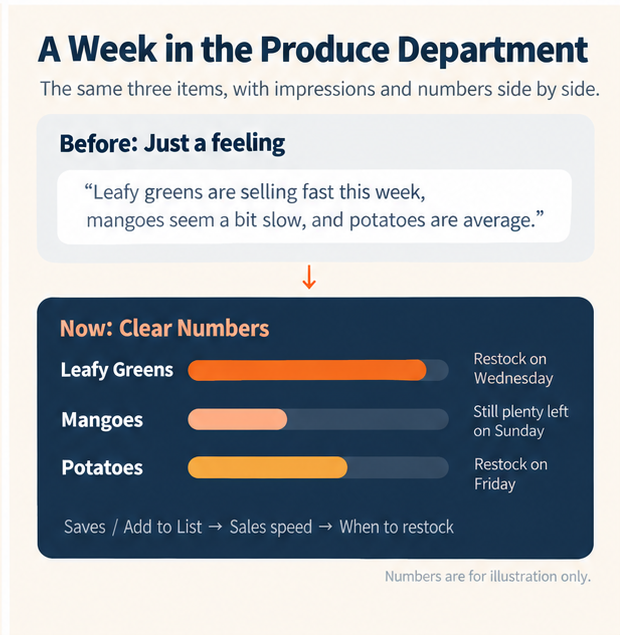
Smaller stores keep it less formal. Before heading home, the manager checks the sales numbers and runs through the week in his head. The produce manager thinks: gai lan moved fast, mangoes are backing up, sweet potatoes were so-so. The meat manager thinks: ribs flew out, beef brisket is sitting, ground pork was average.
So everyone is looking, mostly at POS numbers and month-end books. Those numbers matter. But they tell you how much sold, not why.
What managers really want to know
Spend enough time with department managers and you'll find their questions are very specific:
How did last week's special actually do?When did it sell out? Gone by Wednesday, or still there on Sunday?How fast did it move? Do we run it again next week?What sold well this time last year, and will it sell again?
Most managers already have a feel for the answers. The ones who've been doing this for years are usually close.
But that feel lives in someone's head. When the manager takes a week off, moves on, or is just too busy to notice, the picture gets blurry. And a gut feeling is hard to put on the table and compare with the owner or the department next door.
Knowing it in your gut and having it in front of you are not the same thing.
GoFlyer looks from a different angle
POS captures the moment a shopper pays. GoFlyer captures what they do before that.
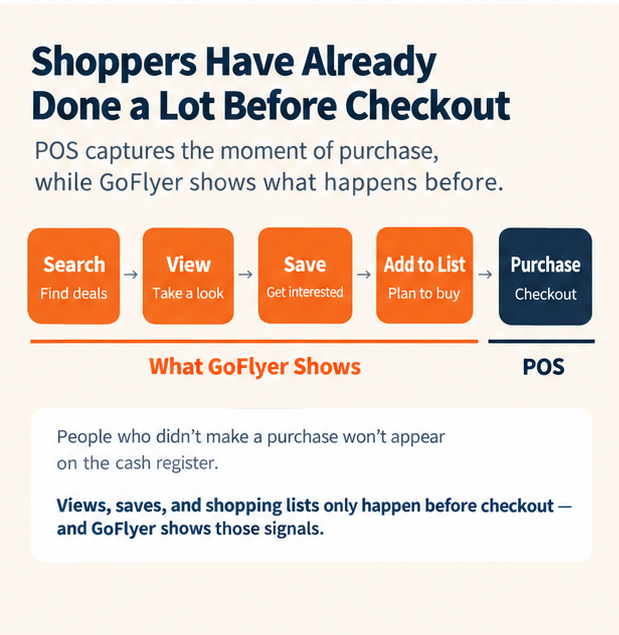
What did shoppers search for on GoFlyer? What did they open, what did they save, and what made it onto their shopping list? All of this happens before anyone walks through the door. It shows what people actually want: what caught their eye, and what they only glanced at.
That's exactly what happened with the salmon. On Tuesday night, plenty of people looked, but very few saved it. POS could never show that, because people who didn't buy never reach the till. Yet that one signal is what got the manager to change course on Wednesday, instead of finding out at Sunday's count that the fish wasn't moving.
GoFlyer isn't meant to replace your POS or your books. It adds one more view, built on what shoppers actually do: what to put on special next, what to order more of, what to pull back on, and what sells in which season.
Shoppers keep changing
Anyone who has run a grocery store knows this: your customers change.
The street that was home to one community ten years ago has new neighbours now. More young families means a different basket. More seniors means a different way of shopping. Even for the same holiday, this year's hot items may not match last year's.

What doesn't change is that people need to buy groceries. What changes is what they buy, when, and why.
Gut feel struggles to keep up. It's built on the past, and shoppers keep moving forward.
Start early, get sharper
Data has one simple rule: the sooner you start keeping it, the more useful it becomes.
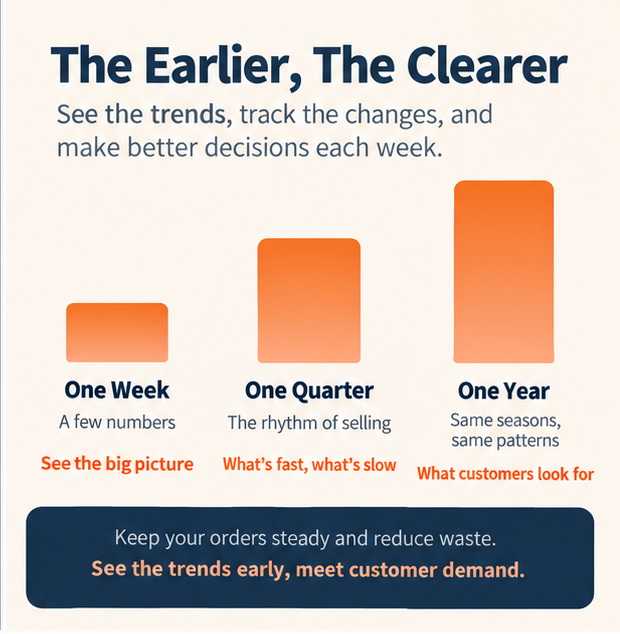
One week gives you a few numbers. One quarter shows you the rhythm of how product moves. A full year tells you what your neighbourhood looks for in each season and each promotion window.
Look every week and adjust every week, and your calls get a little sharper. Sharper calls mean steadier ordering and less waste. Week after week, a manager's read on customers moves beyond instinct to actually seeing what they do.
Whoever starts first gets closest to the customer.
The takeaway
When the salmon finished its seven days, it left behind more than a sales slip. It left a trail of shopper actions: who looked, who saved it, who walked up to the counter holding a phone.
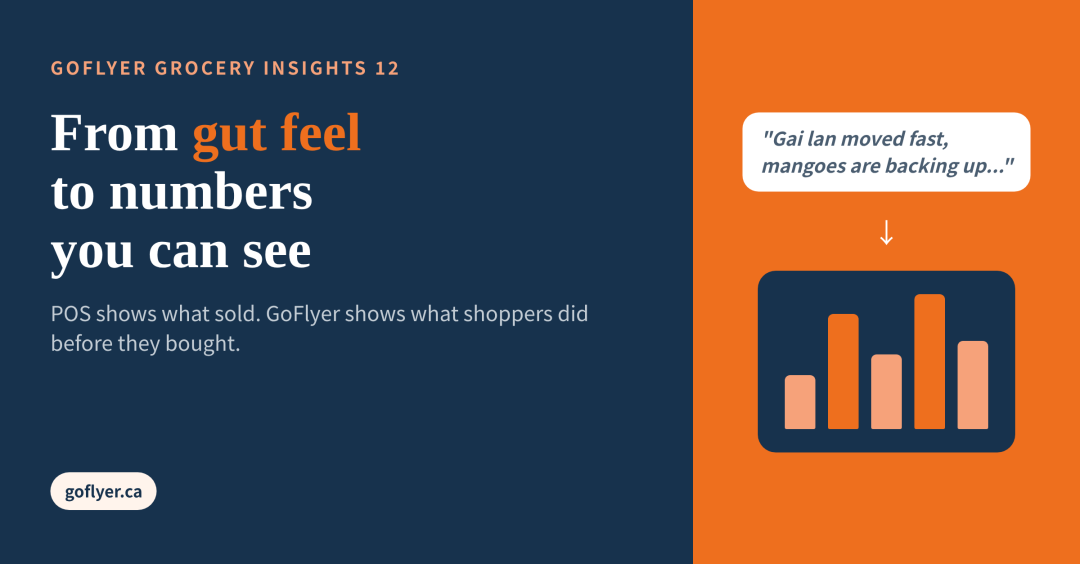
Keep that trail, and it becomes your guide for next week, next month, and the same season next year. That's how a manager's gut feel turns into numbers you can actually see.
The experience still belongs to the manager. The numbers just help them see it more clearly.
Coming up next
Thanksgiving is here, and Christmas and Lunar New Year are right behind it. Next time: using data to plan holiday stock ahead of the rush.
GoFlyer connects Canadian shoppers with local retailers through digital flyers, retail data, and market insights, helping shoppers find better deals and helping retailers turn every promotion into real sales.
Part of the GoFlyer Grocery Insights series. © GoFlyer Inc. All rights reserved.
—Previous Posts—
 Steven Guan
 Steven Guan