GoFlyer Supermarket Insights | Shoppers Compare More Than Prices
Low prices may bring shoppers in, but what keeps them coming back? Discover how supermarkets build customer loyalty through smarter promotions, better shopping experiences, and data-driven decisions.
Every grocer knows the weekly flyer is non-negotiable.
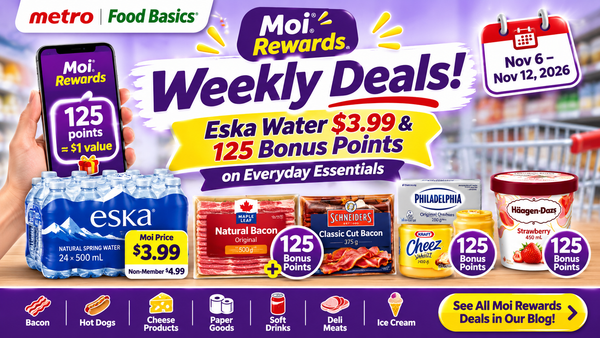
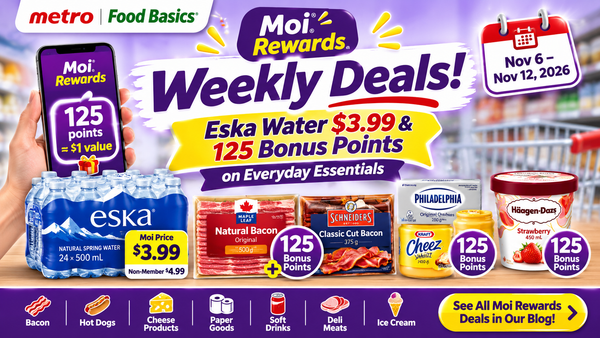
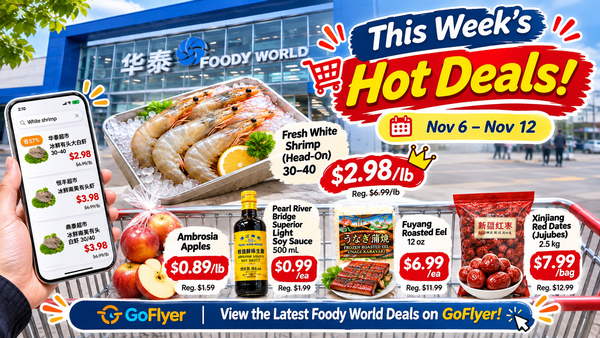
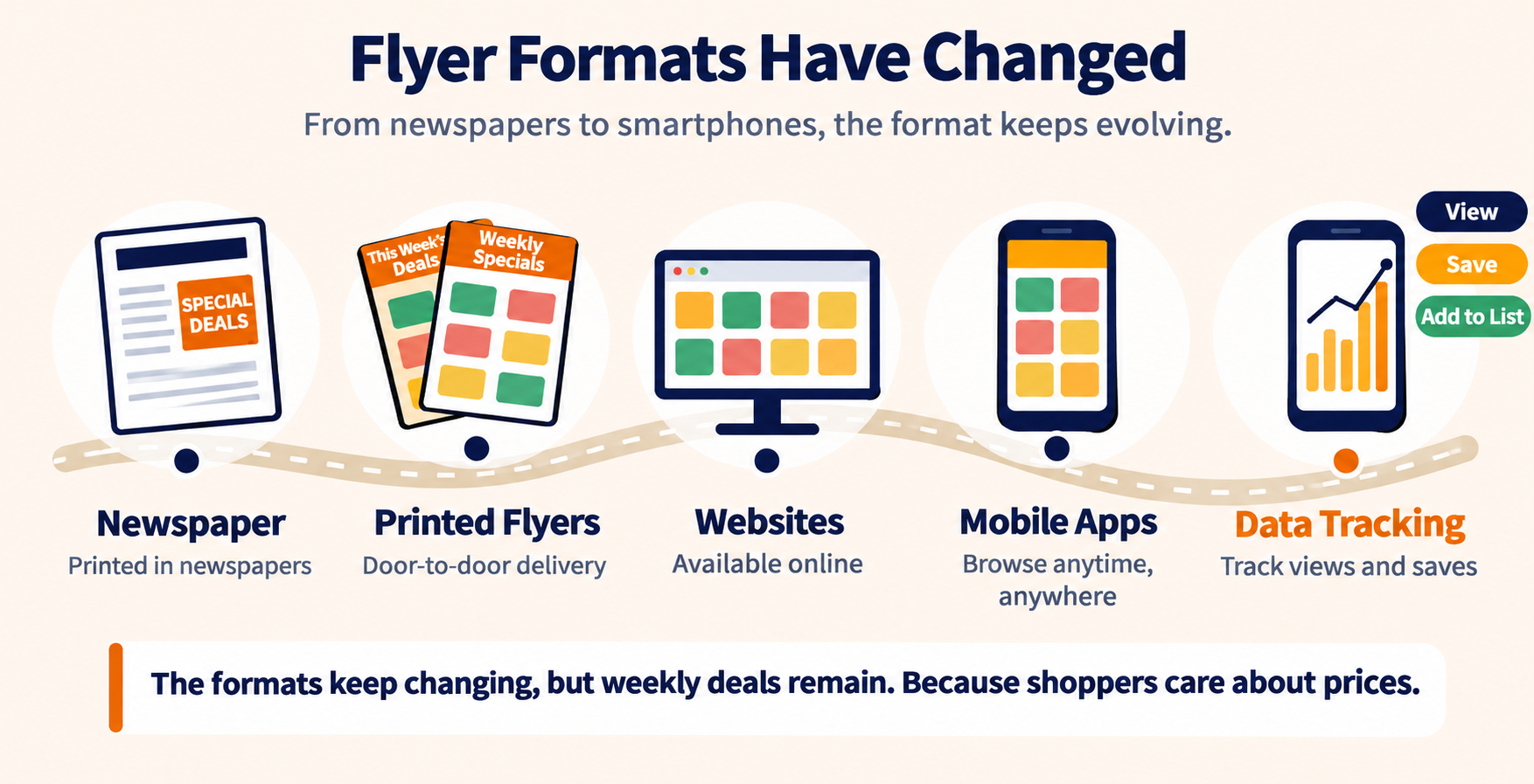
Over the decades, the flyer has changed shape many times: from the newspaper, to paper flyers dropped door to door, to web pages, to today’s phones. Some versions can now even track who viewed a deal, who saved it, and who added it to their shopping list.
The format keeps changing, but the weekly specials never go away. The reason is simple: shoppers really do care about price.
But is price the whole story?
Two stores, one year later
Over the past couple of years, quite a few Asian supermarkets have opened across Toronto and the GTA.
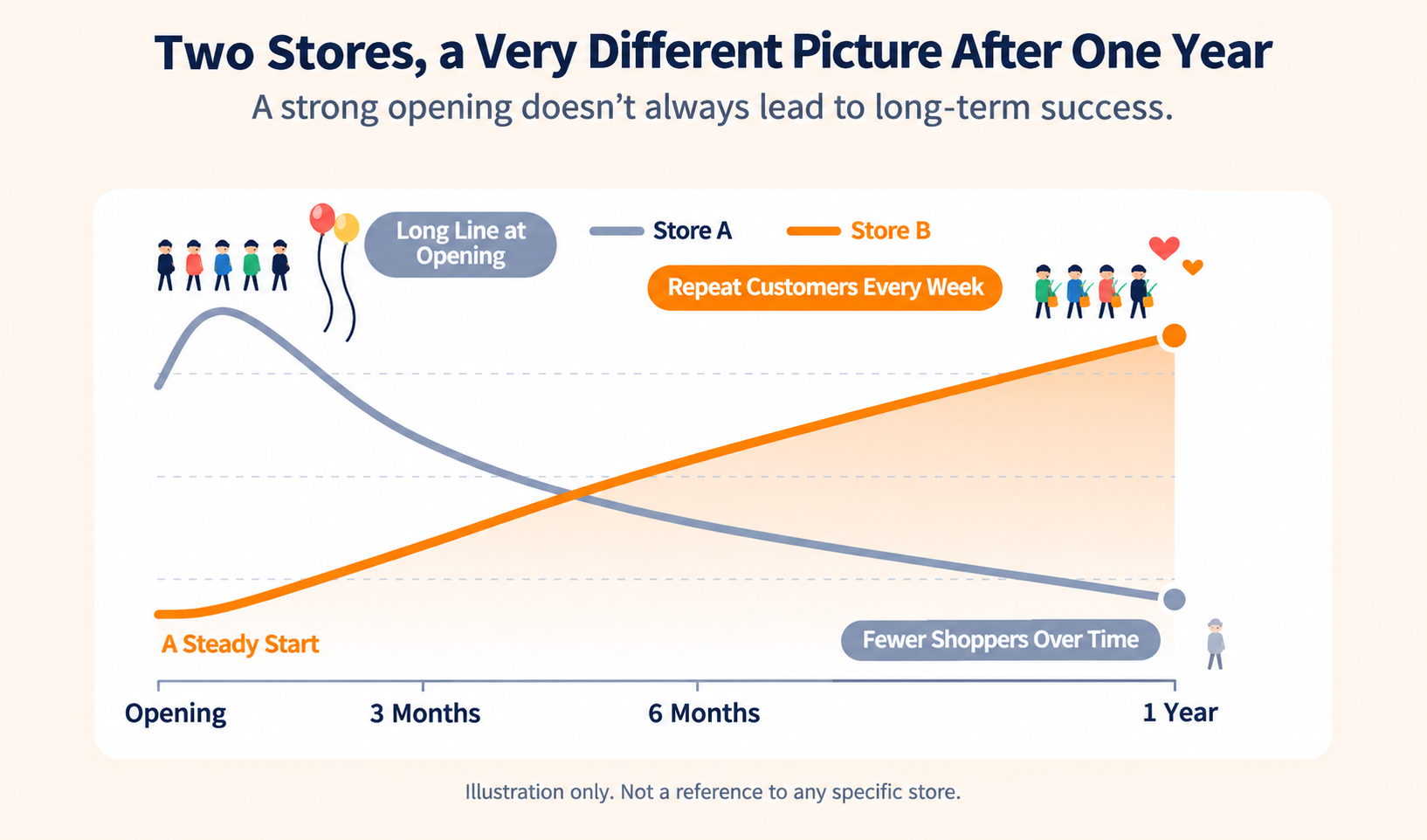
Some opened with lines out the door and a packed parking lot. Others opened quietly, with hardly any buzz.
Three months, six months, a year later, the difference shows.
Some of the stores that opened with a bang slowly lost their crowds. Customers drifted away, and a few struggled to even break even. Some of the quiet ones, meanwhile, gained customers week by week. Their regulars come back every week, and even when a new store opens nearby, those shoppers don’t go far.
Our team has spent more than twenty years in this industry, watching many supermarkets grow from a single location into multi-store operations. We’ve seen this pattern more than once.
Is it really about having the lowest price?
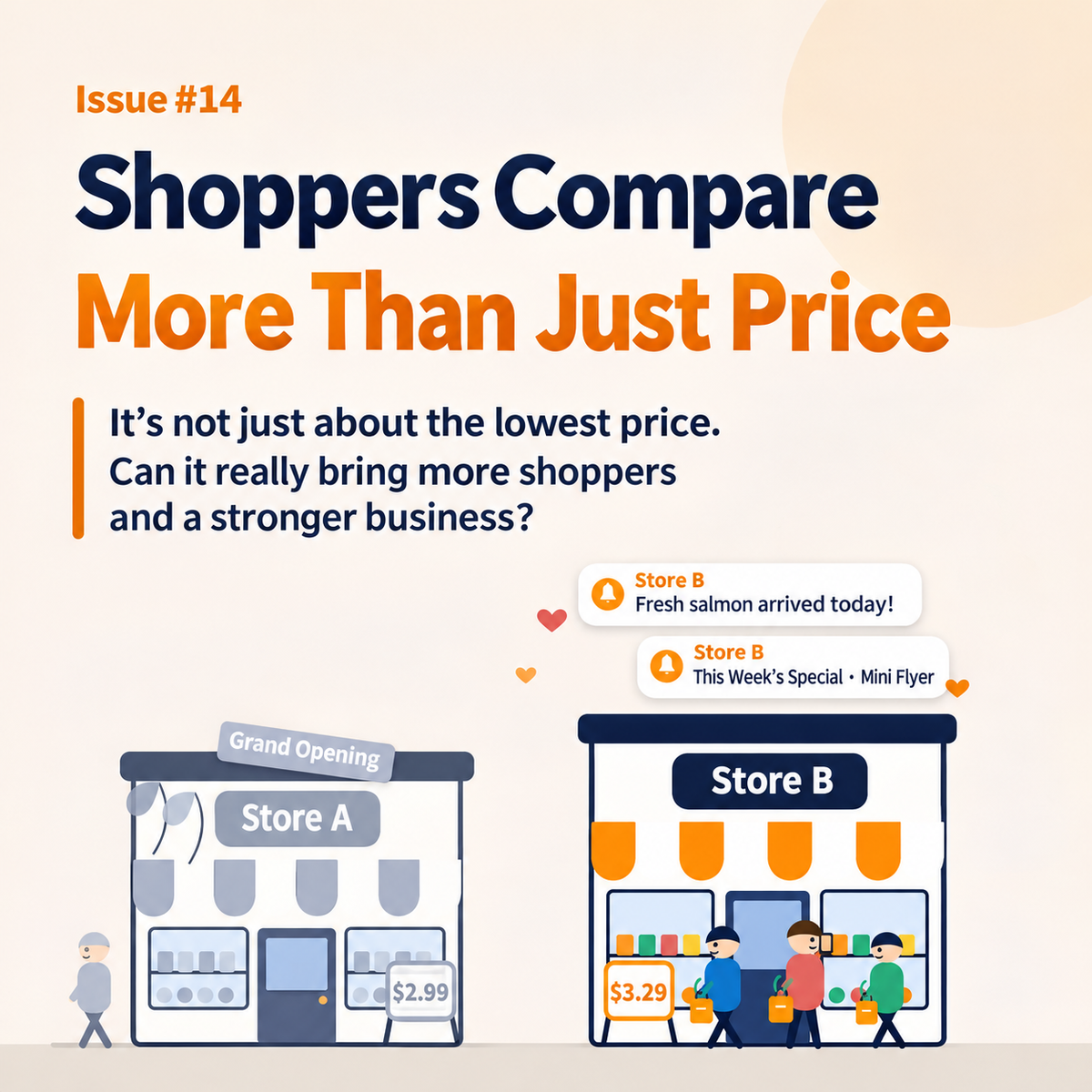
The stores that grew steadily weren’t always the cheapest on the block. In fact, some of the stores that opened strong and then faded had promised the lowest prices from day one. Customers came the first time. They just didn’t stay.
Price can bring a customer in once. What keeps them coming back is something else: whether you have what they need, whether it’s fresh, and whether shopping with you is easy.
Whoever reaches the customer first gets remembered first
There’s one more thing many owners overlook.
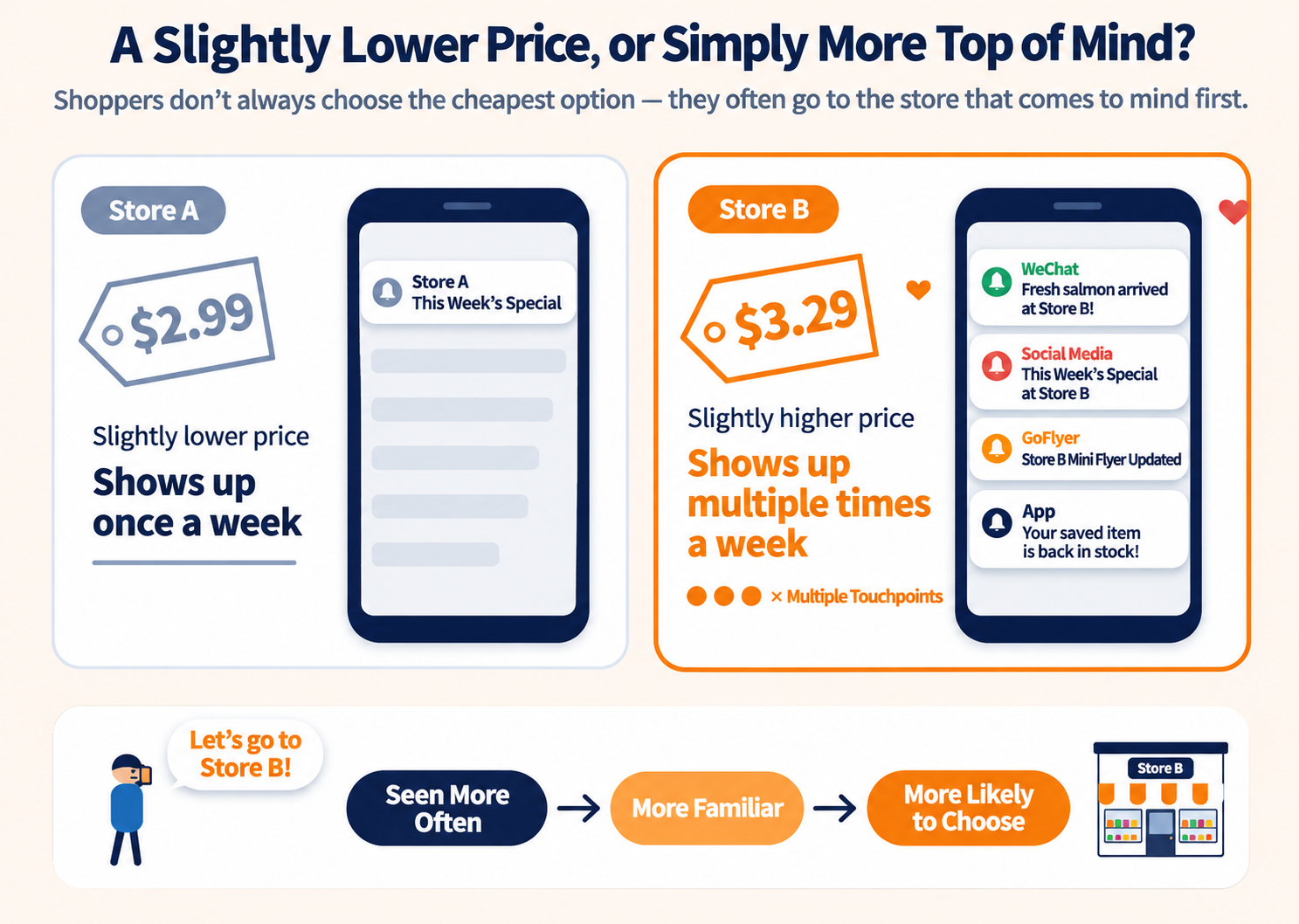
Sometimes Store A really is a little cheaper than Store B on an item, and the customer still goes to Store B. Why? Because Store B always tells them first. When good product arrives, it goes out that same day. Every few days, on the WeChat groups, social media and apps the customer already uses, Store B shows up again: what you’re looking for just arrived, and here’s this week’s price.
Once or twice, the customer may not notice. But after seeing it again and again, when it’s time to shop, Store B is the first name that comes to mind. Sometimes they don’t even realize why.
Psychology has a simple explanation for this: the more often something appears in front of us, the more familiar it feels, and the more familiar it feels, the more likely we are to choose it.
Sometimes customers aren’t comparing who’s cheaper. They’re going with who they think of first.
Every business needs a brain
A healthy body with quick reflexes depends on a brain. A business is no different.
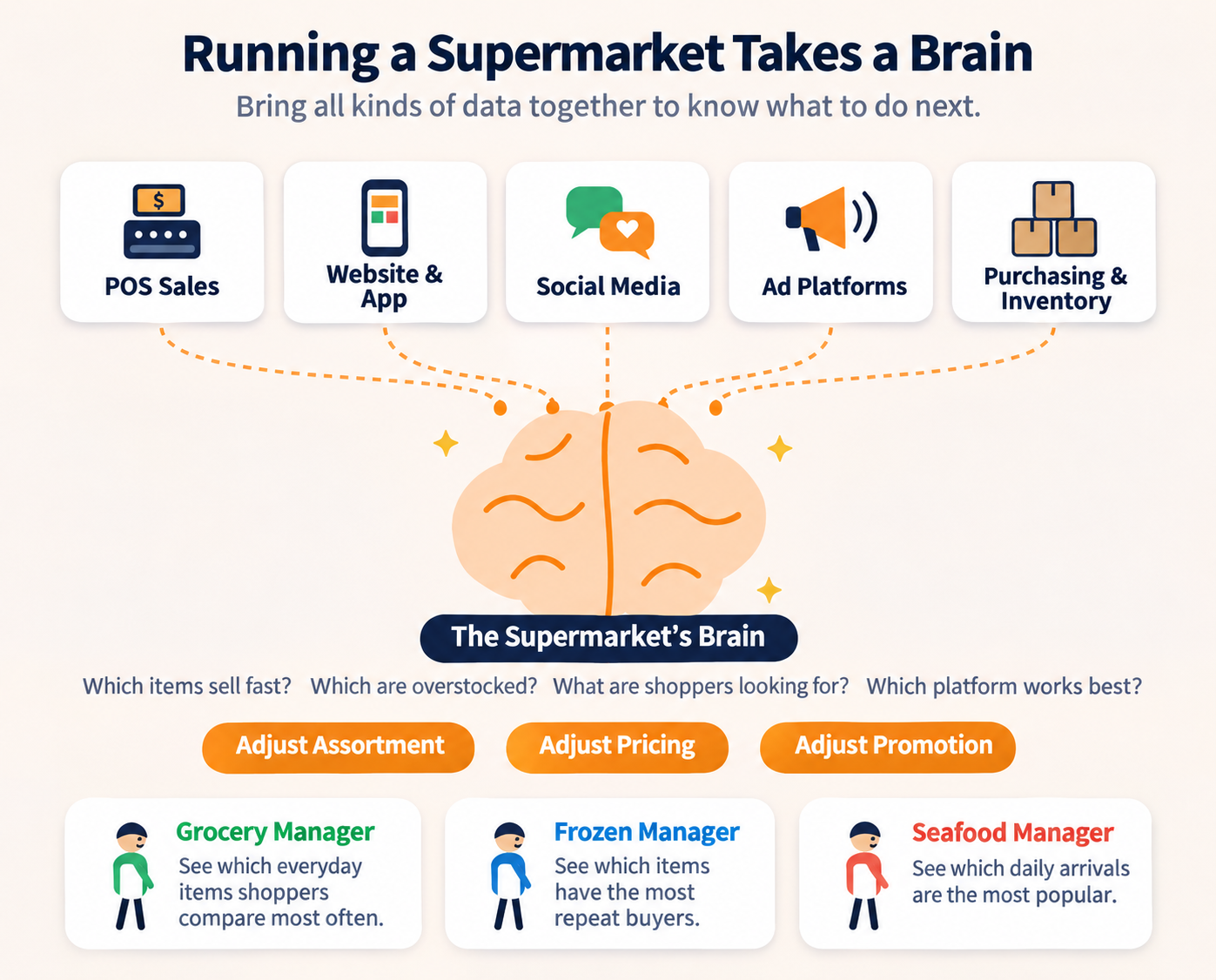
In the past, a supermarket’s brain was the owner’s and department managers’ experience. Today there’s much more to look at: POS sales, website and app analytics, social media response, ad platform data, and the store’s own purchasing and inventory.
Put all of this together, and you can see what’s moving fast, what’s sitting on the shelf, what customers are looking for, and which platform’s audience responds best.
That’s what the steadily growing stores do: every week, every day, they adjust products, prices and promotions based on the numbers, bit by bit, so customers can shop easily, buy fresh, and always find what they came for. The grocery manager watches which everyday staples customers keep comparing, the frozen manager watches what people come back to buy again, and the seafood manager watches which deliveries sell best.
Customers’ attention is scattered. Promotion has to follow.
There was a time when one paper flyer let the whole neighbourhood know this week’s specials.
Not anymore. Customers now get information from many places: WeChat groups, social media, search, all kinds of apps. Promote in just one place, and many of them will never see it.
That’s why we now promote across multiple platforms at once, with tracking on each one, so we can see where customers come from, what they look at, and what they save. When we work with a supermarket, whether for a new opening or a long-term partnership, we bring this data together into weekly and monthly reports, one for our internal team and one for the owner and department managers, and sit down together to decide what to strengthen and what to adjust next. Sometimes we get down to a single product.
Once a decision is made, speed matters.
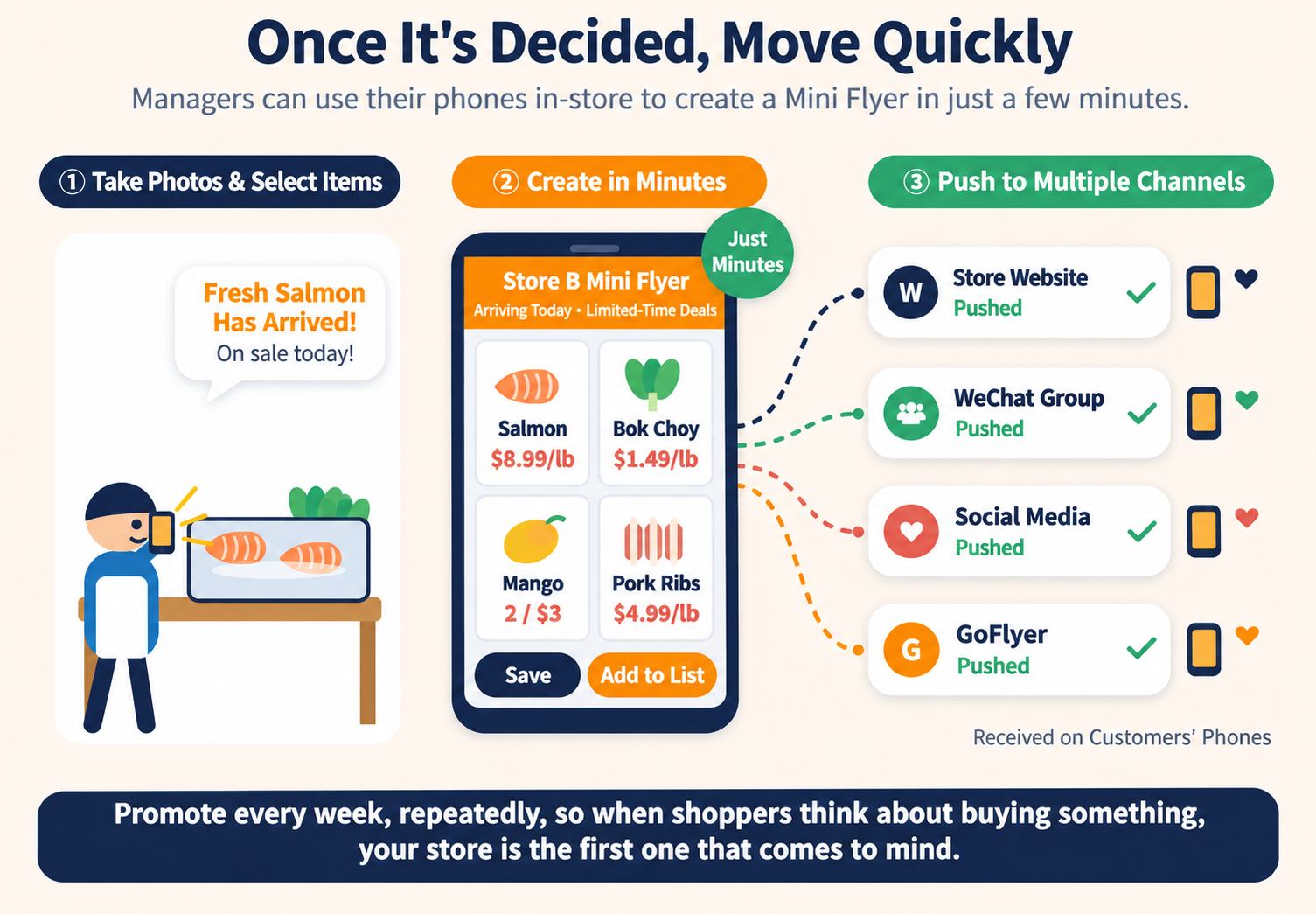
With Mini Flyer, a department manager can snap a few photos in the store, pick a few items, and have a flyer ready in minutes, pushed out to the store’s website, WeChat groups and social media, and to shoppers already searching on GoFlyer. Push every week, push again and again, so that when customers think about what to buy, your store is the first one they think of.
Price wars don’t build loyal customers
Getting prices right still matters. That will never change. But competing on price alone can bring a customer in once. It rarely keeps them for a year.
What really grows a business is getting things a little more right every week than the week before.
Shoppers compare more than prices. And grocers aren’t just competing on who’s cheaper, but on who understands customers better, and who shows up in front of them first.
Next issue
How do you turn that opening-day crowd into customers who come back every week? Next time: the first three months after a new store opens.
GoFlyer connects Canadian shoppers with local retailers through digital flyers, retail data, and market insights, helping shoppers find better deals and helping retailers turn every promotion into real sales.
Part of the GoFlyer Grocery Insights series. © GoFlyer Inc. All rights reserved.
—Previous Posts—
 Steven Guan
 Steven Guan