GoFlyer Grocery Insights |Holiday Sales Aren’t Made the Week Before
Holiday sales start long before the big day. From tracking early shopping trends to promoting deals with Mini Flyer, discover how Asian supermarkets can prepare smarter, respond faster, and capture more seasonal sales.
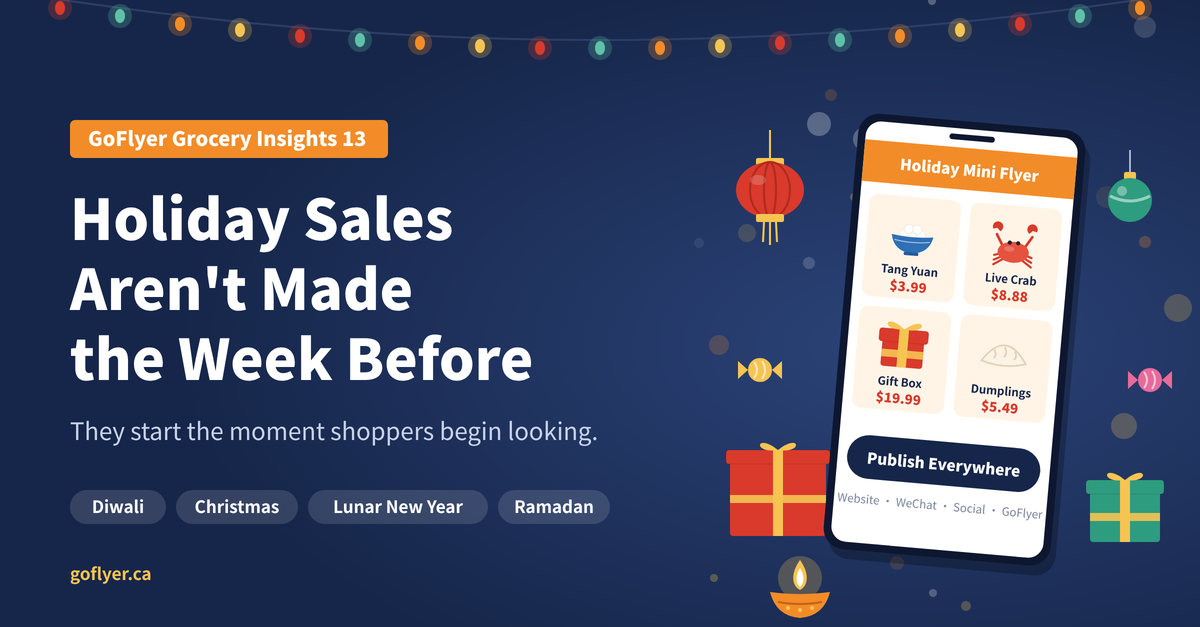
They start the moment shoppers begin looking.
Understanding grocery retail through data. Discovering opportunities through insight.by the GoFlyer Insights Desk
Last time we said that once you’ve watched a full year of data, you know what nearby shoppers will look for in any given season.
Holidays are where that gets put to the test.
One holiday after another
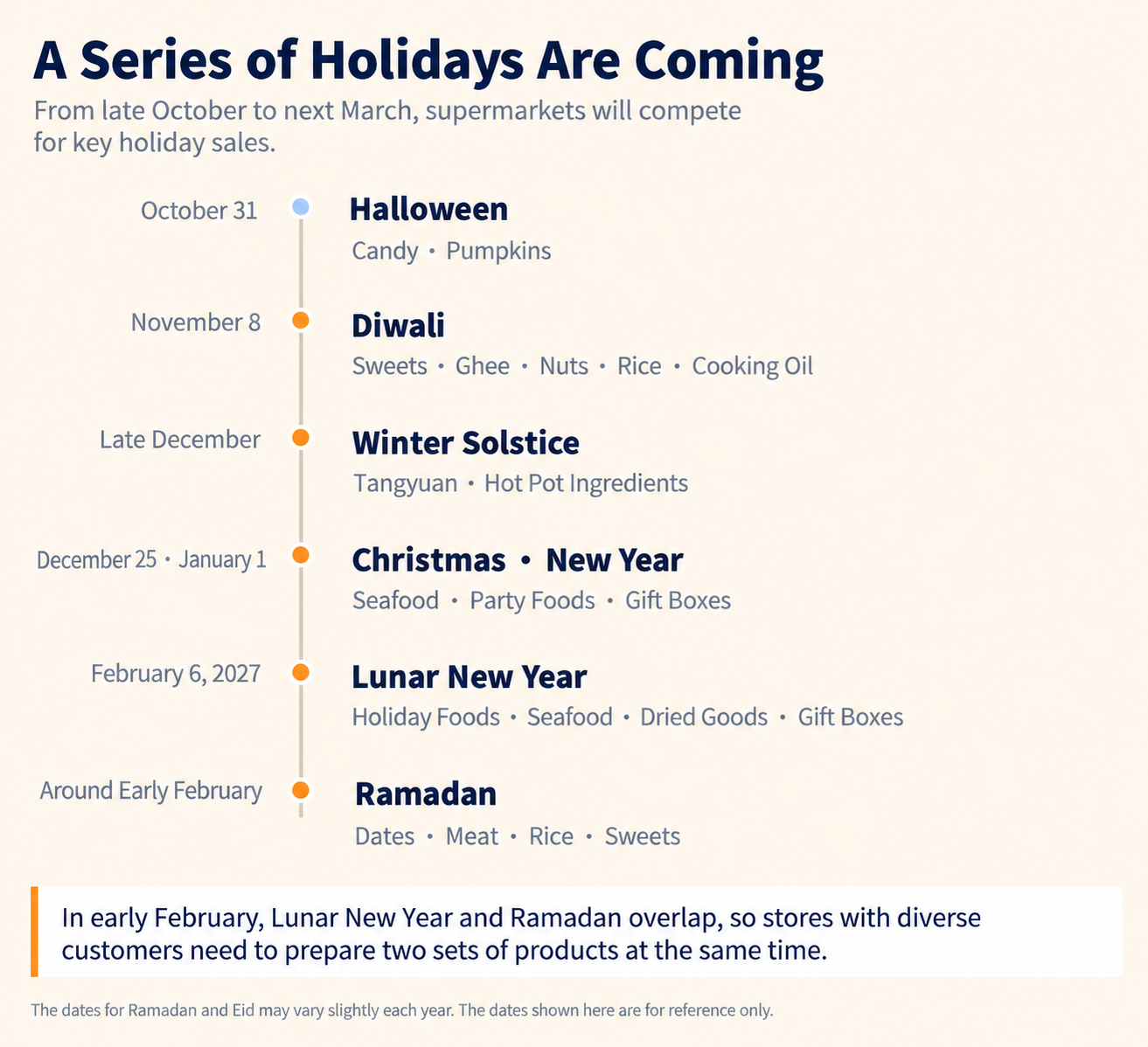
It’s the end of October, and the calendar is about to fill up.
Halloween comes first. Candy and pumpkins move for a few days, but it’s not the main event for most Asian grocers.
Diwali lands on November 8. For South Asian shoppers it’s the biggest celebration of the year: sweets, ghee, dried fruit and nuts, rice and oil all move in volume.
December brings Winter Solstice, Christmas and New Year’s back to back. Tang yuan, hot pot ingredients, seafood and gift boxes all pick up. Plenty of Chinese-Canadian families celebrate Christmas and New Year’s too, which means more gatherings and bigger baskets.
Then Lunar New Year arrives on February 6, the biggest stretch of the year for Chinese grocers. Right around the same time, Ramadan begins, and Middle Eastern and South Asian shoppers stock up on dates, meat, rice and sweets. If your customer base is diverse, early February means stocking for two major holidays at once.
The weeks that matter most
Anyone in grocery knows it: holidays are the most important sales of the year. One good holiday can be worth several regular weeks, and every store on the street is competing for the same spend.
It’s also when things go wrong most easily. Order too little and you’re out of stock three days before the holiday, and shoppers walk across the street. Order too much and you’re clearing gift boxes and preserved meats at a discount in February.
Imported holiday goods make it harder still. You have to commit long before the holiday, when demand is hardest to call.
Shoppers start preparing before we do
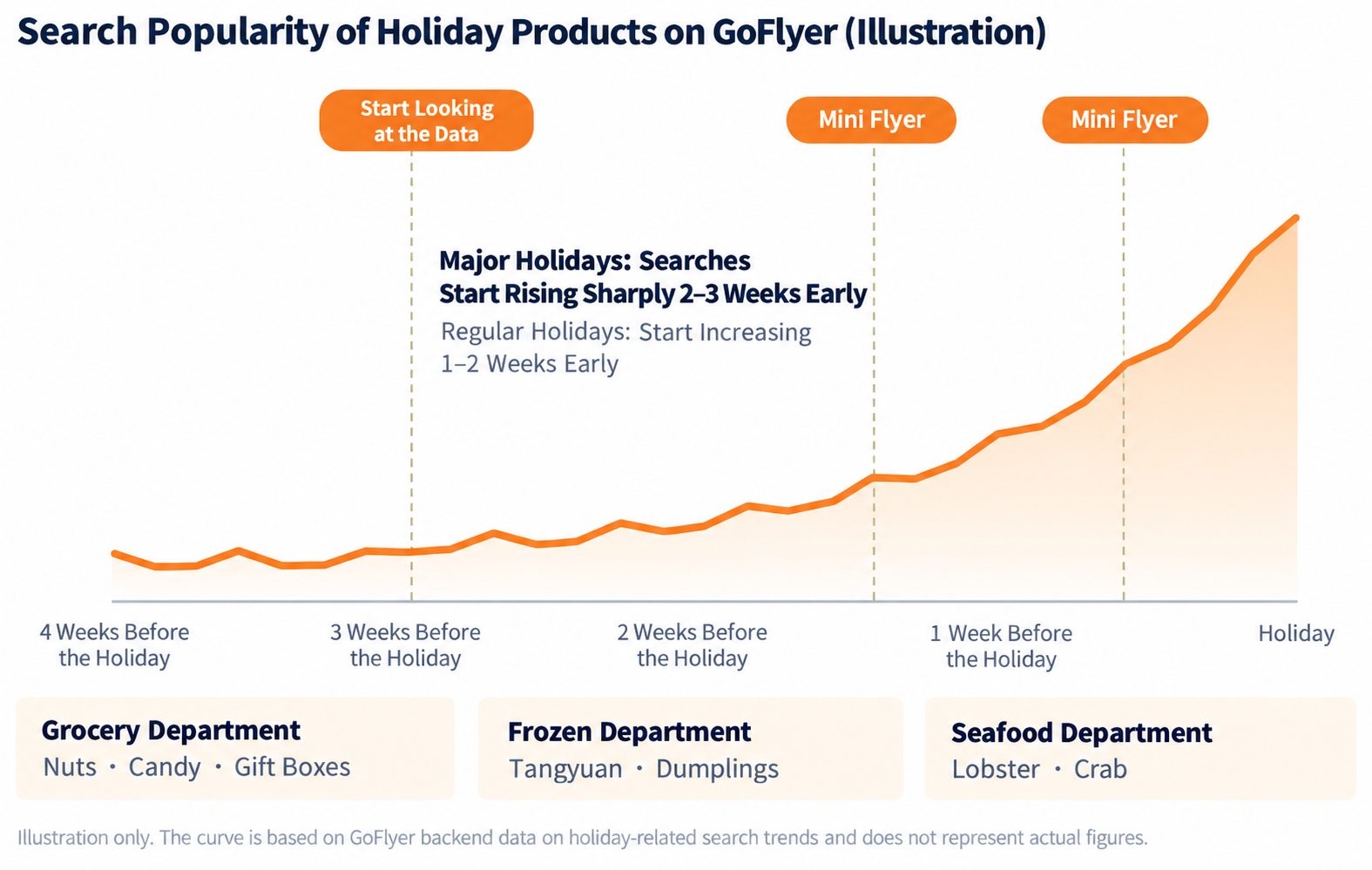
On the GoFlyer platform, we see the same pattern again and again: searches for holiday items start climbing one to two weeks out, and for the big holidays, they begin to spike two to three weeks ahead.
Before Winter Solstice, tang yuan and hot pot items move first. Three weeks before Lunar New Year, searches and saves for nuts, candy, gift boxes and live crab and lobster climb a little more every day. At the same time, stores across the city start stocking up and rolling out holiday specials.
When that curve starts to lift, shoppers are telling you something: they’ve started getting ready.
The grocery manager watches nuts, candy and gift boxes. The frozen manager watches tang yuan and dumplings. The seafood manager watches lobster and crab. Each one keeps an eye on their own section, and whatever moves first tells them where to lean in.
Seeing it is one thing. Moving fast is another.
Spotting the signal is only step one. Holiday weeks move quickly. Shoppers change, and so does what’s on your floor.
The old way meant waiting on a designer, then waiting for the next flyer. By the time it was out, the holiday was half over.
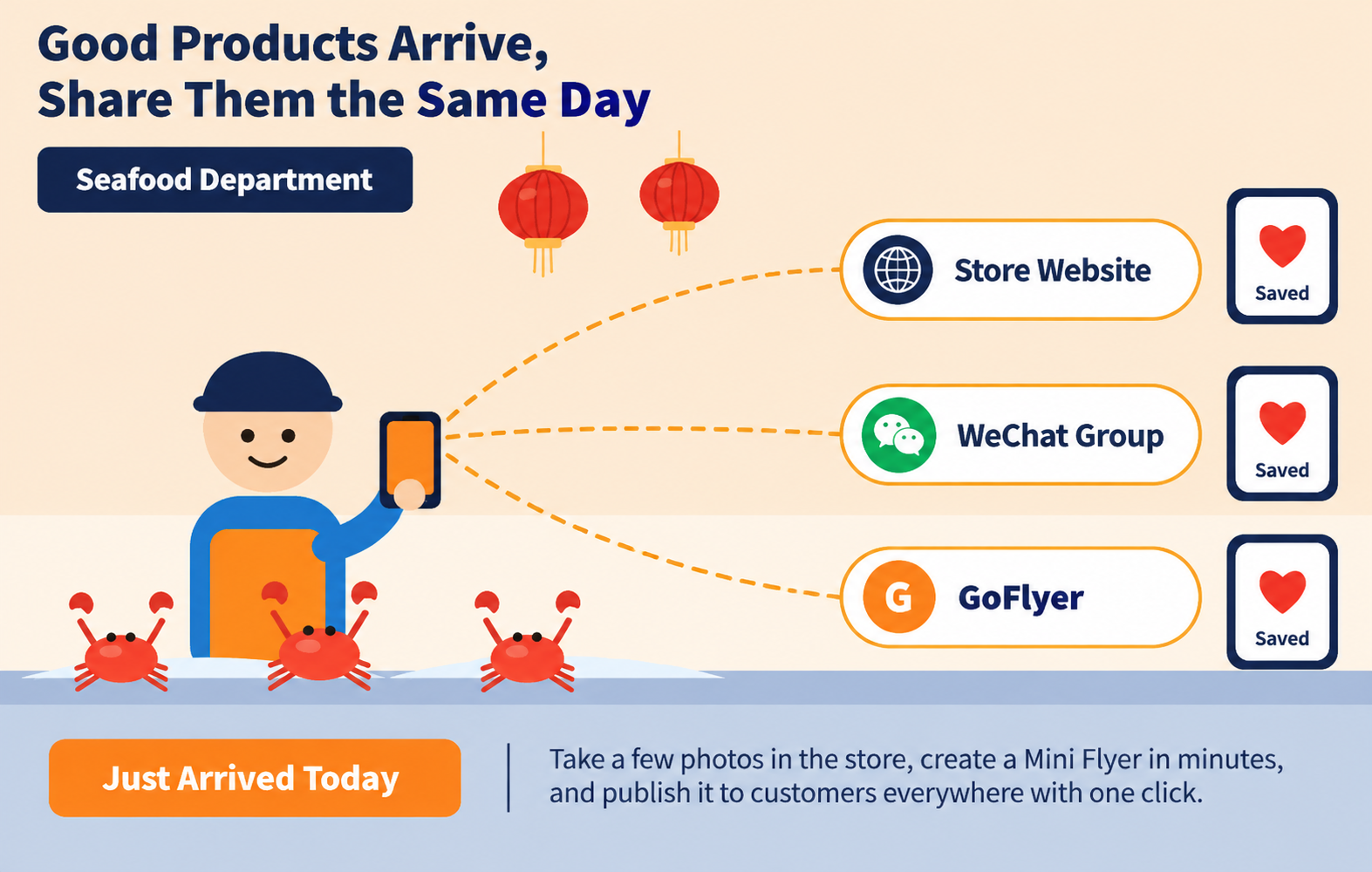
Now managers can use Mini Flyer. Right there in the store, they snap a few photos, pick a handful of items, and build a flyer in minutes. One tap sends it to the store’s website, WeChat groups and social channels, and puts it in front of shoppers on GoFlyer who are already looking for holiday deals.
During the holiday rush, that flexibility is everything:
Monday, tang yuan searches start climbing, so a flyer goes out that day.Wednesday, a great shipment of lobster comes in. Photos go up and a second flyer goes out that afternoon.Rice cakes are selling faster than expected, so they get swapped for preserved-meat gift boxes right away, without waiting a week.
When shopper searches change, the Mini Flyer changes. When the stock on hand changes, the Mini Flyer changes too. What to push harder and what to clear out, managers can decide on the spot, keeping pace with their shoppers and with their own inventory.
A simple rhythm
Three to four weeks out: watch searches and saves, choose your lead items, and order with confidence.
One to two weeks out: send a first Mini Flyer, see how saves and list-adds respond, then decide whether to add volume or switch items.
During the holiday: keep pushing based on what’s selling and what’s arriving.
After the holiday: review what sold out and what sat, and keep it as your reference for the same holiday next year.
Let the numbers lead, add your managers’ experience, and the calls get sharper.
Get ahead of your shoppers
Holiday sales aren’t made the week before. They start the moment shoppers begin looking.
The earlier you prepare, the further ahead of your shoppers you’ll be.
Whoever sees first what shoppers are preparing for gets onto their shopping list first.
Coming up next
Several stores on the same street: how do shoppers actually compare them? Next time, we look at competition through the lens of price comparison.
GoFlyer connects Canadian shoppers with local retailers through digital flyers, retail data, and market insights, helping shoppers find better deals and helping retailers turn every promotion into real sales.
Part of the GoFlyer Grocery Insights series. © GoFlyer Inc. All rights reserved.
—Previous Posts—
 Steven Guan

 Steven Guan