
Hot Pot at Home: A Practical Grocery Guide for Canadian Winters
Planning hot pot at home this winter? Discover essential ingredients, grocery quantities, shopping tips, and easy ways to prepare a cozy hot pot night in Canada.
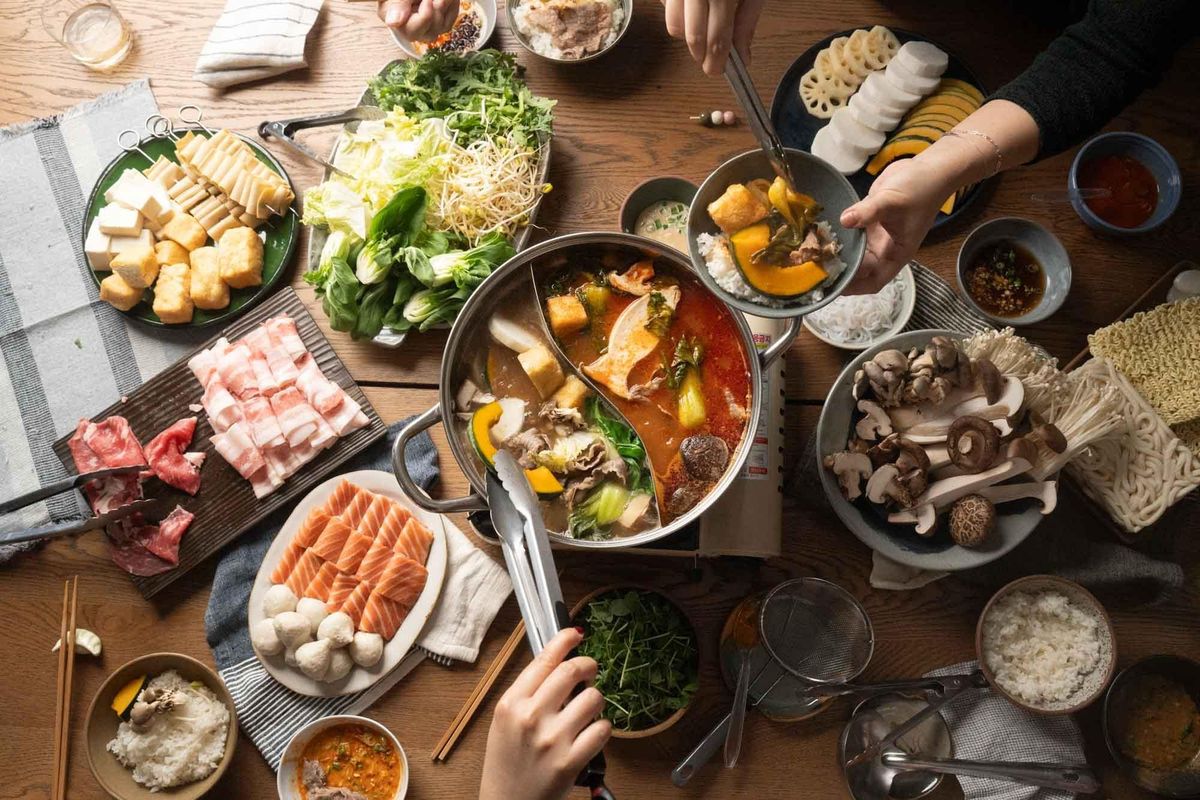
Looking for Hot Pot Ingredients?
From sliced beef and tofu to mushrooms and soup bases, discover what's available at grocery stores near you. Search "Hot Pot" on GoFlyer and plan your next cozy night in.
When the temperature drops and winter evenings arrive earlier, there's something especially comforting about gathering around a steaming pot of food.
For many families across Canada, hot pot is more than just a meal. It's a chance to slow down, share good food, and spend time together without spending hours preparing an elaborate dinner.
Whether you're already familiar with Chinese hot pot, Japanese shabu-shabu, or Korean-style hot pot dishes, or you're trying hot pot for the first time, making it at home can be surprisingly simple.
The best part? You don't need an endless selection of ingredients or an expensive grocery haul to enjoy it.
With a little planning and a thoughtful shopping list, you can create a delicious hot pot night that fits your household, your tastes, and your budget.
1. Start with the Broth: The Heart of Every Hot Pot
Every good hot pot begins with a flavorful broth.
The broth sets the tone for the meal, but it doesn't have to be complicated. Many Asian supermarkets carry ready-made hot pot soup bases, while homemade versions can be prepared with just a few ingredients.
Here are some popular options:
Mild and comforting
A simple broth made with chicken stock, ginger, green onions, and mushrooms is a great starting point. It pairs well with vegetables, tofu, seafood, and thinly sliced meat.
Spicy Sichuan-style
If you enjoy bold flavors, a spicy hot pot base featuring chili peppers and Sichuan peppercorns can bring plenty of warmth to a cold evening.
Tomato-based
Tomato broth offers a slightly sweet and tangy alternative that works especially well with beef, mushrooms, and noodles.
Japanese-style
A light kombu-based broth is another option, allowing the natural flavors of the ingredients to stand out.
Can't decide? A divided hot pot allows you to prepare two different broths, making it easier to accommodate different spice preferences.
Shopping tip: Check the serving instructions on packaged soup bases before buying. Some products are concentrated and need to be diluted, while others are ready to use. Also check ingredient labels for allergens and dietary restrictions.
2. Build a Balanced Hot Pot Shopping List
One of the most enjoyable things about hot pot is the variety of ingredients.
But variety doesn't mean you need to buy everything in the supermarket.
For a satisfying meal, focus on a few ingredients from each major category.
Meat and seafood
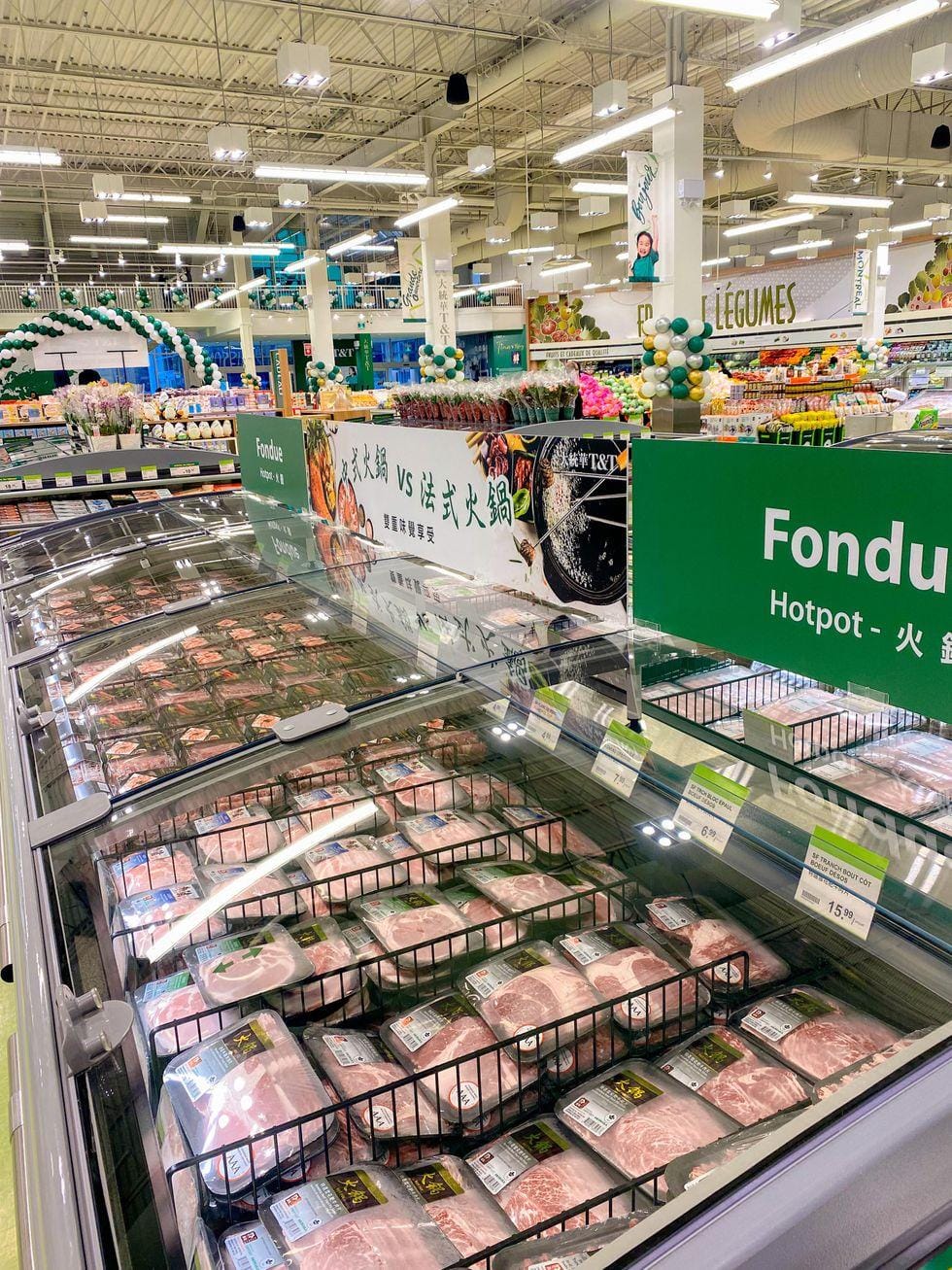
Thinly sliced meat is a classic hot pot ingredient because it's convenient to portion and cook.
Popular choices include:
- Thinly sliced beef
- Sliced lamb
- Thinly sliced pork
- Shrimp
- Fish fillets
- Fish balls and other seafood balls
Many Asian supermarkets offer frozen sliced meat specifically prepared for hot pot, which can save time in the kitchen.
If you're shopping for a smaller household, consider choosing one meat and one additional protein rather than purchasing several large packages.
Vegetables and mushrooms
Vegetables bring freshness, texture, and balance to a hot pot meal.
Some reliable choices include:
- Napa cabbage
- Bok choy
- Spinach
- Enoki mushrooms
- Shiitake mushrooms
- Oyster mushrooms
- Daikon radish
- Lotus root
Leafy vegetables cook quickly, while denser vegetables such as daikon and lotus root generally need more time.
For an easy combination, try napa cabbage, bok choy, and one type of mushroom.
Tofu and other plant-based options
Tofu is a versatile ingredient that absorbs the flavors of the broth.
Consider adding:
- Firm tofu
- Fried tofu puffs
- Frozen tofu
- Bean curd sheets
- Additional mushrooms
These ingredients can also help create a satisfying hot pot without relying entirely on meat.
Noodles and other finishing ingredients
A hot pot meal often ends with noodles cooked in the flavorful broth.
Popular options include udon, glass noodles, rice noodles, and instant noodles.
Choose one type to start. By the end of the meal, the broth will have absorbed flavors from the vegetables and proteins, making it a delicious base for noodles.
3. How Much Should You Buy for Hot Pot?
It's easy to overestimate how much food you need, especially when every ingredient looks tempting.
The following quantities are approximate starting points for a hot pot meal served as the main course. Adjust them based on appetite, dietary preferences, and whether you're serving additional dishes.
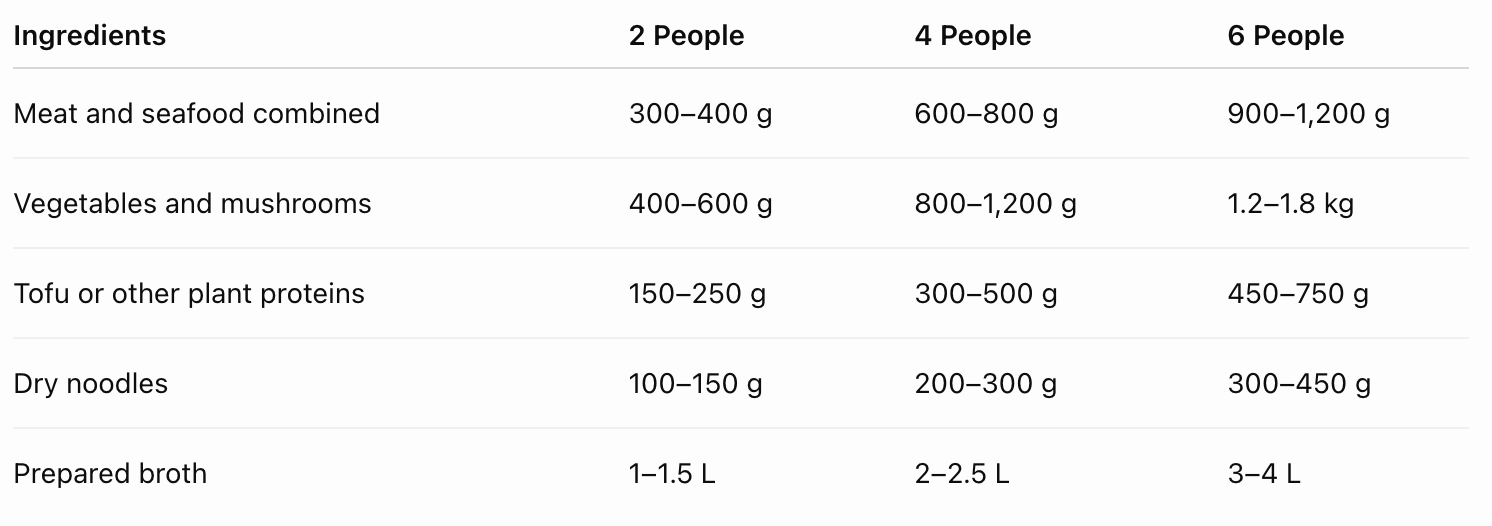
These are flexible meal-planning estimates, not fixed serving requirements. Broth quantities also depend on your pot size and how much liquid evaporates during cooking.
A simple rule: Start with fewer ingredients and refill the table as needed. Keep extra perishable ingredients refrigerated until you're ready to cook them.
4. Where to Find Hot Pot Ingredients in the GTA
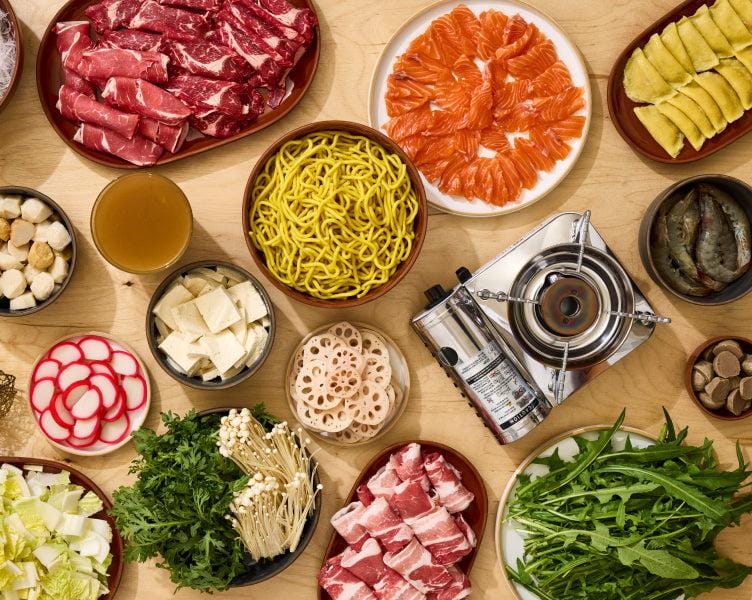
For shoppers in Toronto and the Greater Toronto Area, Asian supermarkets can be particularly useful when planning a hot pot night.
Many carry ingredients that may be less common in conventional grocery stores, including thinly sliced frozen meat, specialty mushrooms, tofu varieties, hot pot soup bases, and dipping sauces.
Depending on your neighborhood, you might explore retailers such as T&T Supermarket, H Mart, or independent Chinese, Korean, and other Asian grocery stores.
Each store may offer a different selection, so availability and package sizes can vary.
You also don't need to purchase everything from one place.
For example, you might buy everyday vegetables at your regular grocery store and visit an Asian supermarket for sliced meat, specialty tofu, or a particular soup base.
The goal isn't necessarily to visit more stores. It's to find the ingredients you actually want without making shopping unnecessarily complicated.
5. Make Hot Pot Night Easier on Your Grocery Budget
Hot pot can be flexible, but buying too many ingredients can quickly increase the total cost.
A few simple habits can help.
Choose your proteins first.
Meat and seafood may account for a significant part of your grocery bill. Decide which one or two proteins you want before shopping, then build the rest of your meal around them.
Buy versatile vegetables.
Napa cabbage, mushrooms, and leafy greens can also be used in stir-fries, soups, and noodle dishes later in the week.
Compare package sizes, not just prices.
A larger package isn't always the better choice if you won't use it. Compare unit prices where available and consider how much you can realistically store.
Check your freezer before shopping.
You may already have frozen shrimp, sliced meat, dumplings, or noodles that can become part of the meal.
Look at grocery flyers before heading out.
Seasonal promotions may help you find useful ingredients at different stores. However, a discounted item is only a good purchase if it fits your meal plan.
Using GoFlyer, you can browse available grocery flyers and compare advertised offers before deciding where to shop.
6. Prepare Ahead for a Relaxed Hot Pot Night
One reason hot pot works so well for gatherings is that much of the preparation can happen before guests arrive.
A simple preparation routine makes the evening easier:
Before your guests arrive
- Wash and prepare the vegetables.
- Cut tofu into bite-sized pieces.
- Prepare the broth according to your recipe or package instructions.
- Arrange sauces and condiments.
- Set out serving bowls, chopsticks, and separate utensils for handling raw ingredients.
- Keep meat and seafood refrigerated until needed.
Once everyone is seated, bring the broth to a steady boil and cook ingredients in manageable batches.
Make sure meat and seafood reach safe internal cooking temperatures. Use a food thermometer where practical, especially for thicker pieces, and avoid relying on appearance alone.
For reference, Health Canada recommends cooking poultry pieces to 74°C, pork to 71°C, and fish to 70°C. Cooking requirements vary by ingredient.
Keeping raw and cooked foods separate is especially important when everyone is sharing the same table.
7. What to Do with Leftover Hot Pot Ingredients
One of the advantages of planning a hot pot meal carefully is that many ingredients can be used in other dishes.
Unused napa cabbage can become a stir-fry or soup ingredient.
Extra mushrooms work well in noodle bowls, rice dishes, and omelettes.
Unused tofu can be added to soups or cooked with vegetables.
Leftover uncooked noodles can be saved according to their package instructions.
For food safety, refrigerate perishable ingredients promptly. Keep unused raw ingredients separate from cooked food and broth that has been used at the table.
Health Canada advises refrigerating cooked leftovers within two hours and eating refrigerated leftovers within two to three days or freezing them for later use.
Planning a few meals around the same ingredients can make grocery shopping more practical and help reduce food waste.
8. A Cozy Winter Tradition, Your Way
There's no single right way to enjoy hot pot.
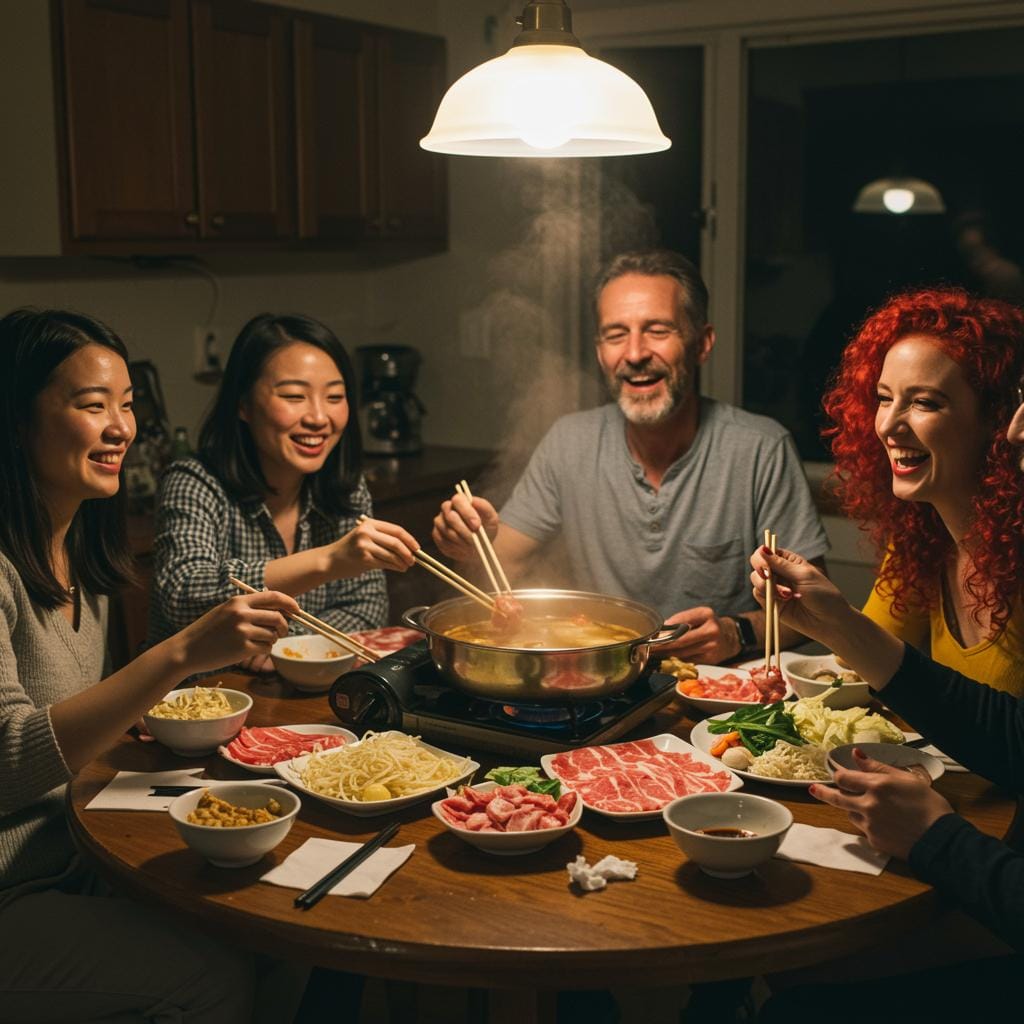
Some households prefer a spicy broth with plenty of sliced beef. Others enjoy a lighter soup filled with mushrooms, tofu, and vegetables. Some keep things simple with just a few ingredients, while others turn hot pot into a weekend gathering with friends.
That's what makes it such a welcoming winter meal.
You can adapt the ingredients, flavors, and portions to suit the people around your table.
And when the weather outside is cold, sharing a warm meal at home can be one of the simplest pleasures of the season.
Planning Your Next Hot Pot Night?
Before heading to the grocery store, take a few minutes to check what you already have, create your shopping list, and explore available weekly grocery flyers.
With GoFlyer, you can discover grocery offers from participating stores and plan your shopping around the ingredients you need.
Explore grocery flyers on GoFlyer and get ready for your next cozy night in.