
Chopping Wood, Carrying Water
There is no shortcut in business — only the discipline of doing simple things well, every single day.

What 20 Years in Business Has Taught Me About Long-Term Success
At the end of my last article, I said the next topic would be about “the invisible wall of scaling” — why business owners often feel more exhausted as they open more locations.
I still want to write about that. But this week, I want to slow down first.
A few days ago, I was listening to an English podcast I really like. It told a simple story that stayed with me for a long time.
The more I thought about it, the more it reminded me of the business owners I have met over the past 20 years — the stores, the restaurants, the retailers, the service businesses, the ups and downs, the successes and the failures.
And I realized that before we talk about scaling, algorithms, systems, or marketing strategy, there is something even more fundamental worth talking about.
What do good businesses — the ones that last five years, ten years, or even longer — really have in common?
The story goes like this.
A young monk wanted very badly to become as wise as the Buddha. So he went to the Buddha and asked:
“What should I do if I want to become like you?”
The Buddha thought for a moment and gave him a simple answer:
“Chop wood. Carry water.”
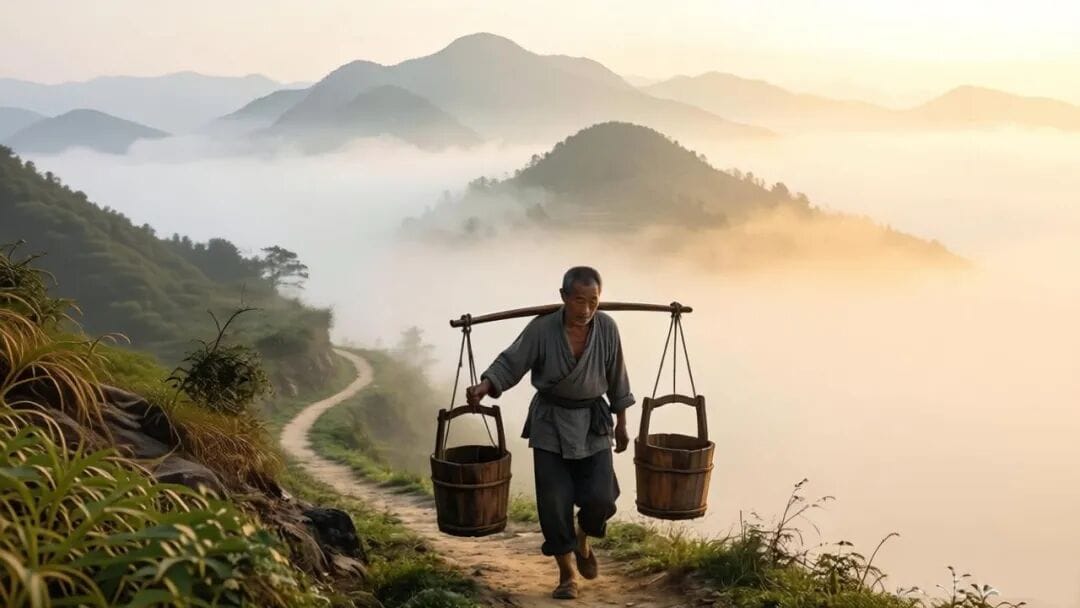
The young monk was disappointed. He expected a deep lesson, a secret method, or some kind of special wisdom.
Instead, he was told to do the most ordinary things.
Every day, he chopped wood. Every day, he carried water.
Years passed. He asked the Buddha again. The answer was still the same:
“Chop wood. Carry water.”
So he kept going. Day after day. Year after year. He did the same simple, repetitive, ordinary work.
Many years later, the young monk had become an old man. One day, he stood in front of the Buddha again.
This time, he did not ask any questions.
Because he finally understood the answer.
The wisdom was never hidden in some secret shortcut. It was built through the daily discipline of doing simple things with care, again and again, for a very long time.
That story made me think about business.
Over the past 20 years, my work has brought me into contact with many different types of businesses. Supermarkets are one major part of it, but I have also worked with restaurants, retailers, real estate companies, education businesses, and many local service providers across the Greater Toronto Area.
I have seen businesses start from one or two small locations and grow steadily over ten or twenty years. I have seen businesses launch with a lot of excitement, look very successful for a short time, and then slowly disappear. I have seen owners go through strong years, difficult years, and everything in between.
And I have also seen many business owners looking for a shortcut.

They hope one advertisement will immediately bring a wave of customers. They hope one promotion will quickly turn the business around. They hope there is a special marketing trick, a secret formula, or one big move that will take them to the next level.
I understand that feeling completely.
Who starts a business without wanting to see results quickly?
But after watching businesses for two decades, I have learned that very few lasting businesses are built that way.
The truth is often much less glamorous.
Many businesses that grow too fast or chase attention too aggressively disappear just as quickly.
The businesses that last usually understand something much more basic.
They serve customers well every day.They improve their products little by little.They listen to users.They fix problems.They improve the details.They build trust one customer at a time.They earn repeat business one experience at a time.
None of this sounds exciting.
In fact, it sounds boring.
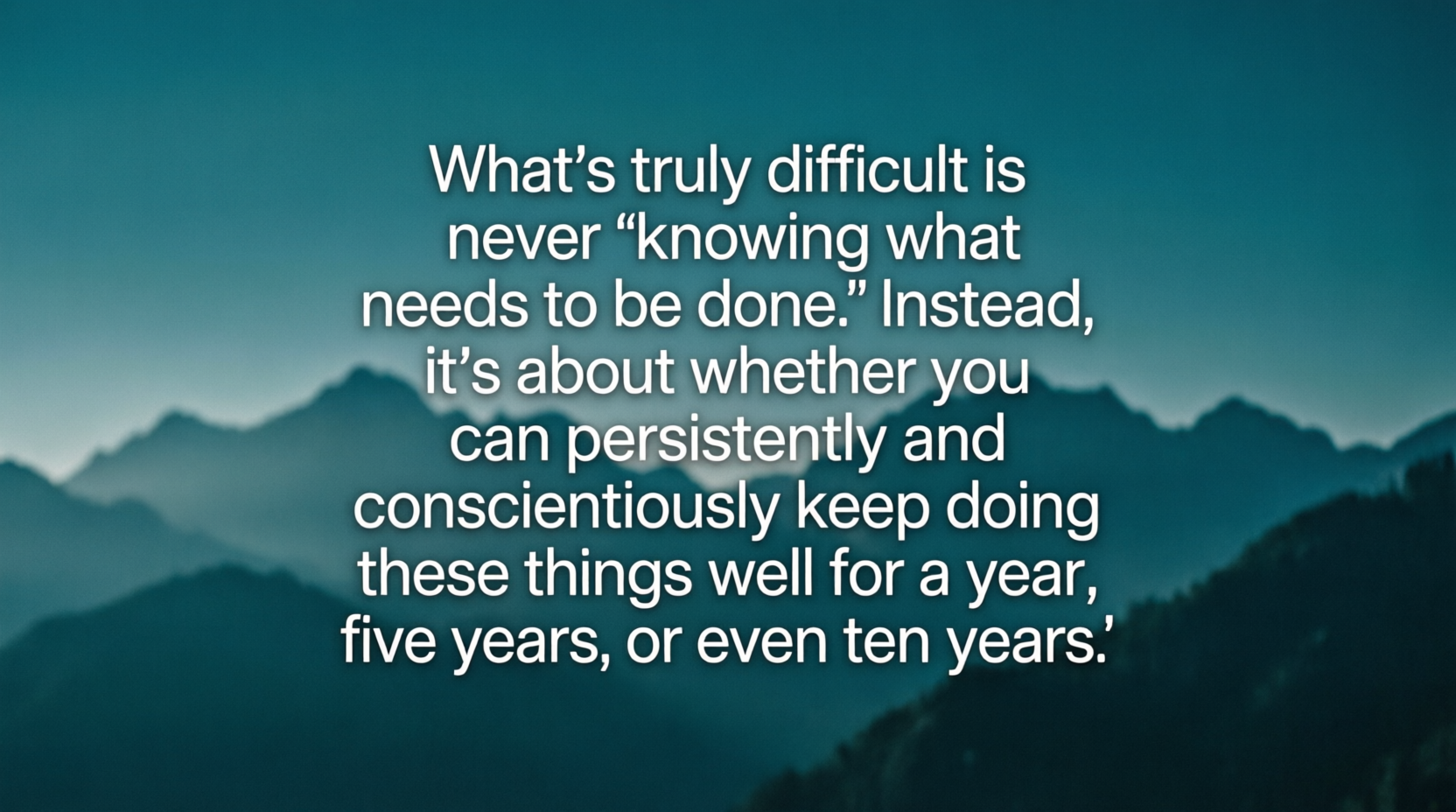
But the hard part in business is usually not knowing what to do.
The hard part is doing the right things consistently — for one year, five years, ten years, or longer.
Another thing I have come to believe more strongly over the years is this:
Profit is important, but profit is usually the result, not the root cause.
Of course, business owners need to make money. They take risks, carry pressure, employ people, pay rent, manage inventory, and deal with uncertainty every day. Profit matters.
But the businesses that last usually care about something deeper than profit alone.
They care about whether they are truly serving customers.They care about whether they understand what people need.They care about whether their product is getting better.They care about whether the experience is improving.They care about becoming more professional over time.
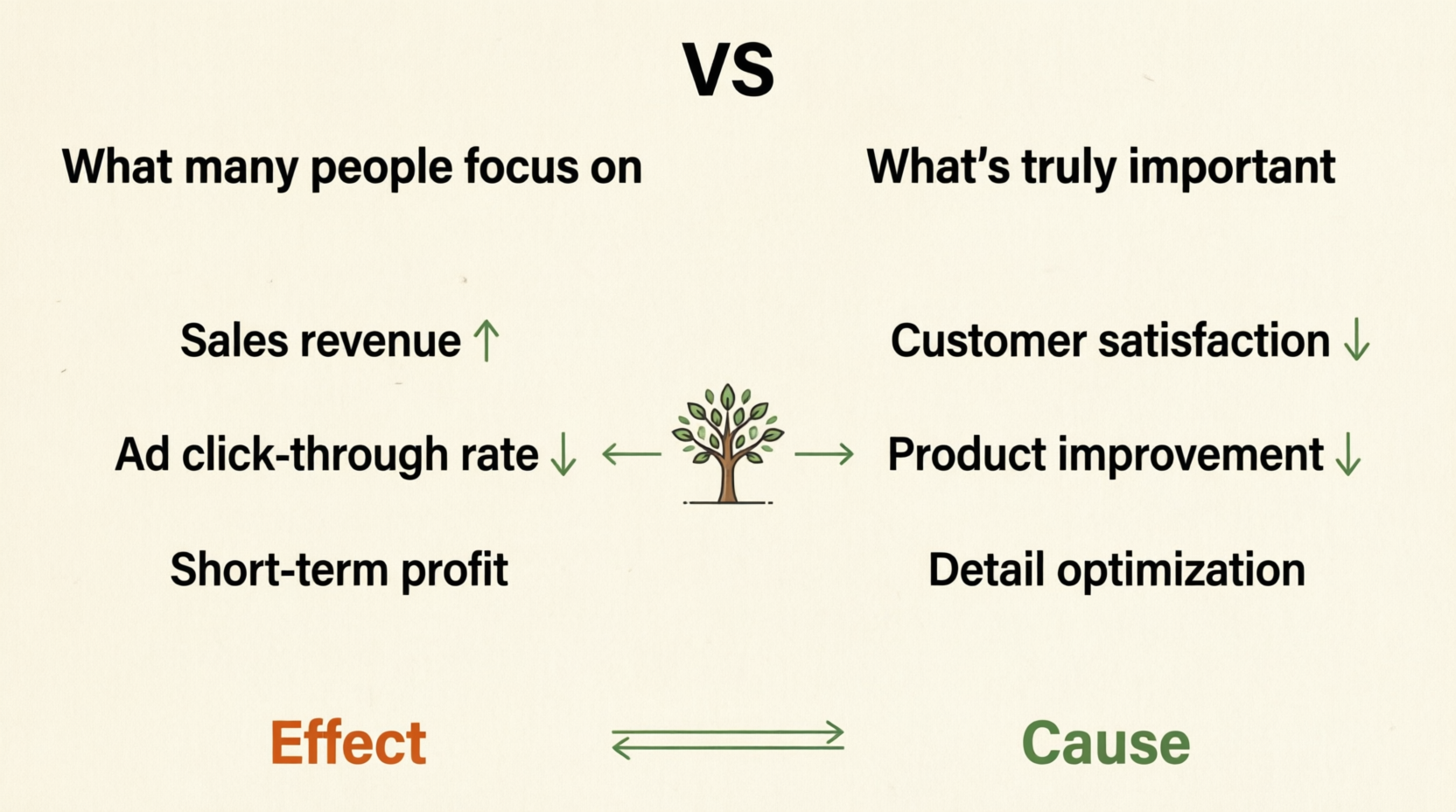
When those things are done well, profit has a much better chance of becoming the natural result.
Many people focus only on the fruit.
But long-term business owners spend most of their time taking care of the roots.
When I look back at the businesses that have truly stayed strong, I think they usually have two things in common.
First, they understand what really creates value behind the money.
They know why customers come back. They know why people trust them. They know what creates long-term value. So they put their energy into service, product quality, details, consistency, and customer experience — not only short-term traffic or short-term profit.
Second, they are able to repeat the important work for a very long time.
Many important things in business are not complicated. What makes them difficult is that they must be done again and again.
Adjusting the shelves.Checking product quality.Managing inventory.Training staff.Serving customers properly.Following up on small problems.Reviewing every promotion.Improving every flyer.Understanding every deal more deeply.

These things may sound boring.
But in many businesses, the real competitive advantage is built from thousands of small actions that most people never see.
Many people can work hard for three months. Some can keep going for one year. But very few can do the same important things seriously for ten years.
At GoFlyer, we have gone through a similar change in mindset.
On the surface, we are digitizing supermarket flyers and organizing grocery deals in a smarter way. But at a deeper level, we believe in the same principle.
Every week, we need to organize each supermarket’s flyer information carefully.We need to improve every detail.We need to adjust the algorithm.We need to help users find the products they actually care about.We need to make grocery deals easier to see, easier to understand, and more useful for real families.
There is no huge breakthrough every week.
There is no “change the world” moment every day.
Most of the time, we are just doing the work.
We are chopping wood.We are carrying water.
In business, there is no permanent shortcut. There is no magic solution that solves everything once and for all.
Many people keep asking, “When will I become successful?”
But maybe the more important question is:
When nobody is watching, are you still doing the work properly?
Are you still serving each customer with care?Are you still improving the product?Are you still fixing the small problems?Are you still paying attention to the details?Are you still willing to do the boring but necessary work?

That is what the story reminded me of.
All businesses are different. The industry may be different. The size may be different. The model may be different.
But in the end, the principle is often the same.
Many people dream about the big moment — the breakthrough, the recognition, the success, the peak.
But the most important part of the journey may not be that one big moment.
It may be how seriously we live and work through the ordinary days.
How we serve one customer.How we solve one problem.How we improve one detail.How we keep going when the work is repetitive.How we stay serious when nobody is applauding.
For any business that wants to last, the answer may still come down to four simple words:
Chop wood. Carry water.
—Previous Posts—
 Steven Guan
 Steven Guan