They Also Started as Just a Few Small Stores
The next stage of grocery retail is no longer expansion, but systems and data.
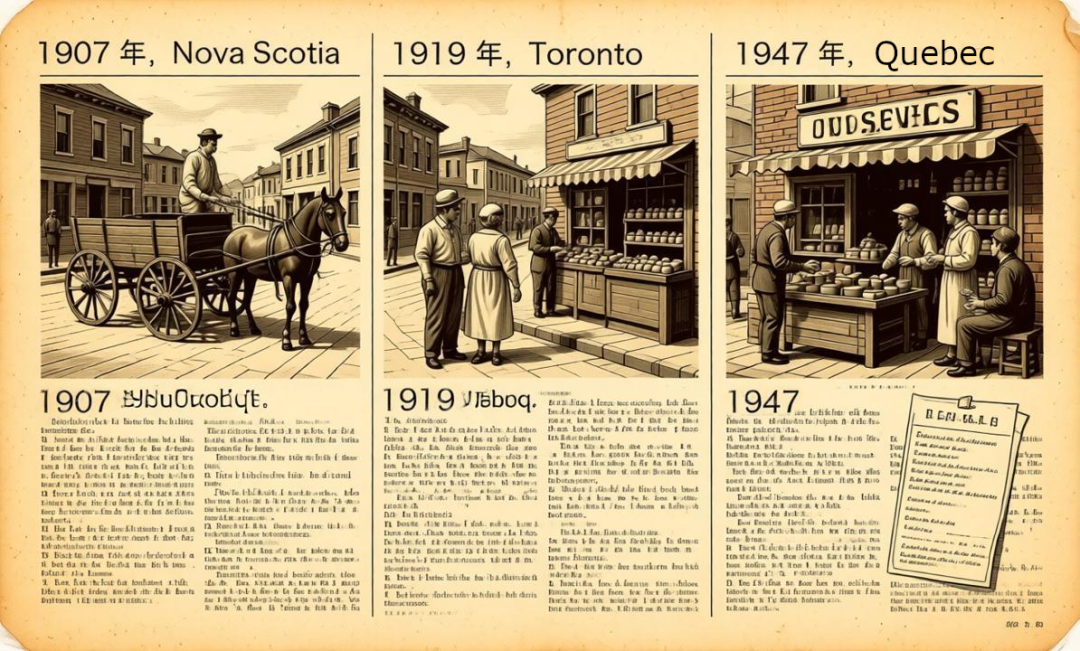
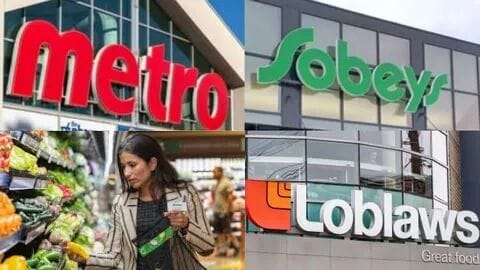
In 1907, in Nova Scotia, a butcher traveled from town to town by horse-drawn wagon, delivering meat and taking orders from local families.
There were no refrigerated warehouses. No operating systems. Not even a proper storefront in the way we would imagine today.
His last name was Sobey.
In 1919, in Toronto, a husband and wife opened a tiny grocery store on a street corner. They had limited shelves, limited products, and very little capital. What they did have was hard work, trust, and a relationship with their neighbourhood.
They named the store after themselves: Loblaw.
In 1947, in Quebec, a group of small independent grocers were tired of being squeezed by rising supplier prices. So they sat down together and asked a simple question:
What if we joined forces, bought together, and negotiated together?
That loose buying group eventually became Metro.
Today, Loblaw, Sobeys, and Metro together control a major share of Canada’s grocery market, with combined annual revenue well over $100 billion.
But if you go back to the very beginning, their starting point was not so different from many independent Asian and ethnic supermarket owners today:
One small store.One hard-working owner.One person making almost every decision.
When the Owner Is the Strength — and the Bottleneck
The growth of Chinese and Asian supermarkets in Canada over the past 20 to 30 years has been remarkable.
Many owners built their businesses from the ground up through hard work, product knowledge, sharp instincts, and a deep understanding of their customers.
When there is only one store, the owner being deeply involved is often the company’s greatest advantage.
The owner knows the products.The owner knows the customers.The owner can make decisions quickly.No meetings. No delays. No corporate layers.
In many cases, that speed is something large companies actually struggle to match.
With two or three stores, this model can still work.
With four or five, it may still survive.
But beyond that, many owners begin to notice a strange pattern.
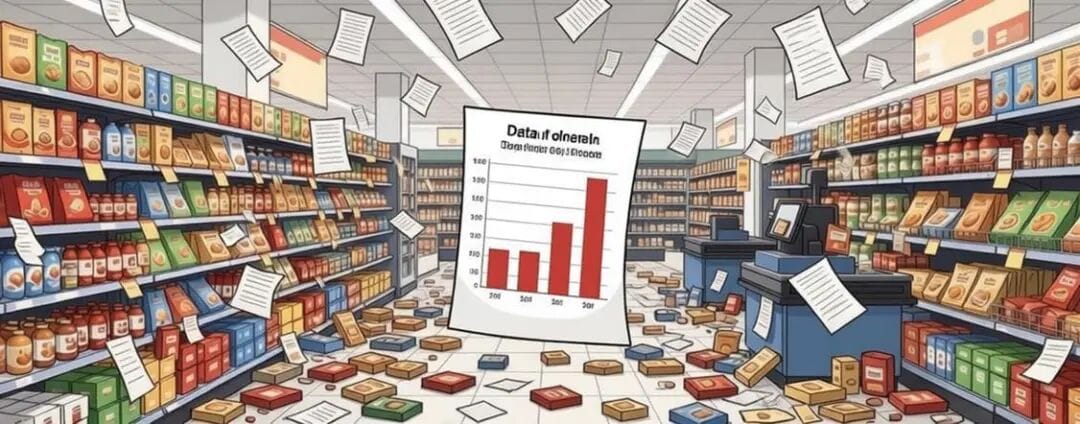
The newer stores do not perform as well as the original locations.Staffing becomes harder.Inventory becomes messier.The owner is constantly putting out fires.Everyone is busier than before, but the profit does not grow in the same way.
Sometimes, it even goes down.
This is not because the owner is not working hard enough.
Very often, it is the opposite.
The problem is that the business has reached the limit of what one person can personally manage.
No matter how capable an owner is, there are only so many hours in a day. When every important decision must go through one person, that person eventually becomes the biggest bottleneck in the company.
The Big Chains Hit the Same Wall
Many people imagine that Loblaw, Sobeys, and Metro simply grew smoothly from small stores into national giants.
That is not what happened.
At key moments in their history, they all had to slow down, reorganize, and rebuild from the inside.
Loblaw came close to collapse in the 1970s after years of aggressive expansion. The company had too many underperforming stores, weak internal control, and serious operational problems. It took a new generation of leadership years to close weak locations, rebuild systems, and restore discipline.
Sobeys, after acquiring the Oshawa Group, also went through a long period of difficult integration. Different systems, different cultures, and different operating habits had to be brought together.
Metro’s early challenge was also very real: how do you turn a loose group of independent store owners into a more disciplined organization with shared standards, shared processes, and common direction?
All of them went through the same painful realization:
For a business to grow, it must reduce its dependence on the personal ability of the founder or owner.
That may sound counterintuitive, but it is one of the most important lessons in business.
Great companies are not built only on great individuals.
They are built on systems that can keep working even when the founder is not personally involved in every detail.

A Story About T&T
There is a story about T&T Supermarket that I have always remembered.
It is not something I have seen widely discussed, and I do not believe it appears in Cindy Lee’s own book either. But it left a strong impression on me.
When Cindy Lee first came to Canada from Taiwan, her original idea was not necessarily to build everything from scratch.
At one point, she looked at an existing Chinese supermarket chain in Toronto: Foody Mart, known in Chinese as “Golden Mountain Supermarket.” At that time, it was already well known in the local Chinese community and had multiple locations.
So she met with the owner to discuss a possible acquisition.
But during the meeting, she noticed something important.
The owner’s phone almost never stopped ringing.

Should we accept this shipment? Call the owner.How should we price this item? Call the owner.Where should this product be displayed? Call the owner.Can this employee take time off? Still call the owner.
Almost every decision, large or small, went back to one person.
After seeing that, Cindy Lee made a decision that many people at the time may not have understood.
She walked away from the deal.
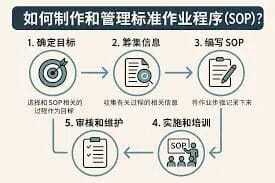
Her thinking was roughly this: the business may be profitable, and the owner may be extremely capable, but the company did not have a system that could operate independently from the owner. Everything was built around a person, not around a structure.
So instead of buying an existing business, she decided to build from the ground up — with her own operating philosophy, management structure, decision-making process, systems, and standards.
Looking back, that decision showed great long-term vision.
What made T&T powerful was not only its product selection or merchandising ability.
It was the fact that the company gradually became a system-driven retail organization.
Some stores may be very profitable today. But if the foundation is not strong, the business may become a beautiful small building — not a skyscraper.
System Building Can Start with Something as Simple as a Flyer
When people hear words like “data,” “systems,” or “digital transformation,” they often imagine ERP projects, automated warehouses, or multi-million-dollar technology investments.
But system building does not always have to start there.
For many major grocery retailers, one of the earliest and most important data tools was much simpler:
The weekly flyer.
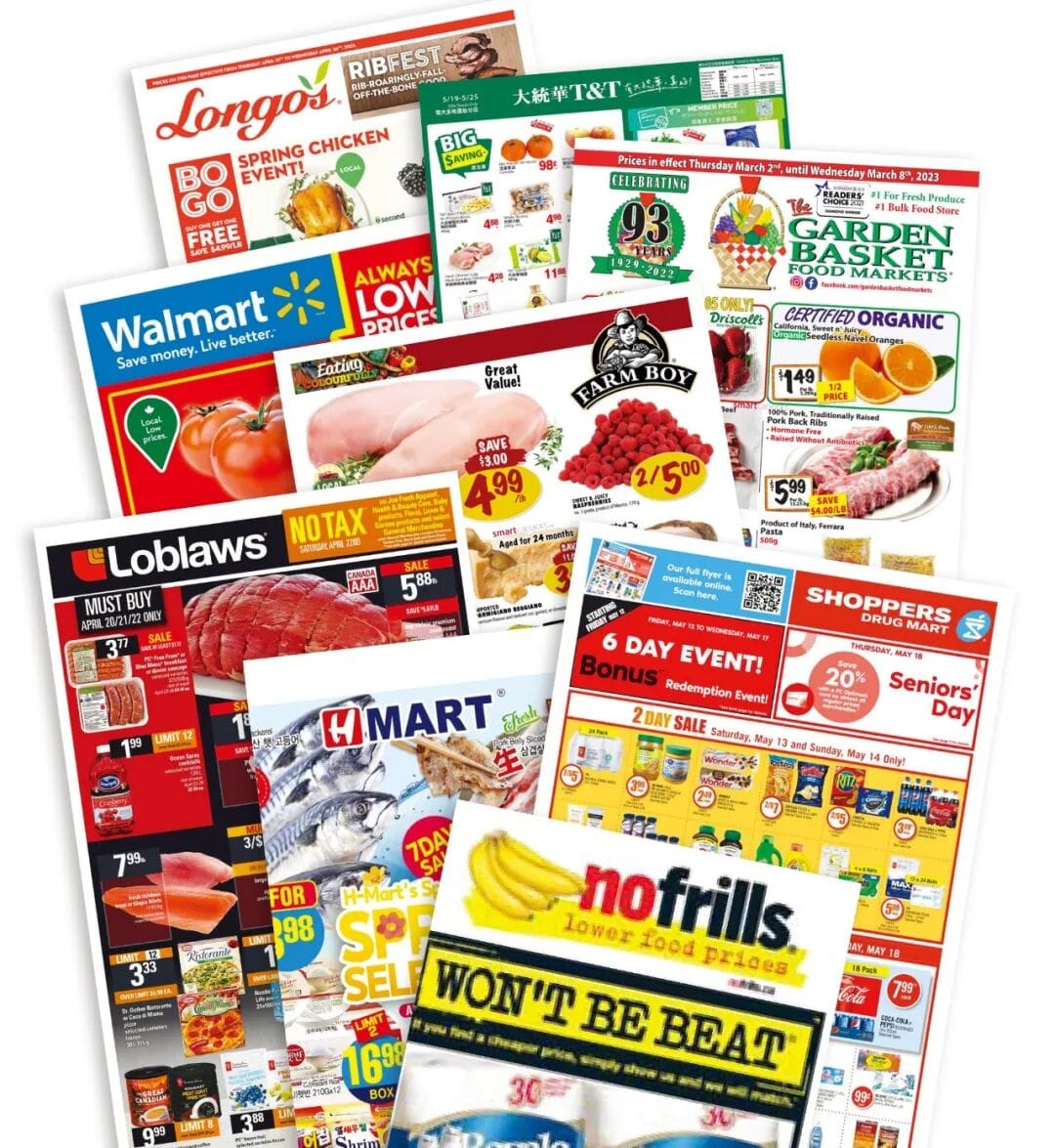
Many people think of a flyer as just advertising. Print it, distribute it, and move on.
But for large grocery chains, the flyer has never been just a piece of advertising.
Behind every promoted item is a chain of decisions:
Why promote chicken legs this week instead of pork?Why put beef on the front page?Why repeat the same product for three weeks?Why does one region’s flyer look different from another?
Because over time, retailers learned to track what customers respond to.
What they look at.What they buy.Which prices create traffic.Which products drive basket size.Which categories perform differently by neighbourhood, season, or cultural moment.
Year after year, the flyer became much more than a promotional tool.
It became a customer behaviour system.

Today, the real strength of large retailers is no longer just how many stores they have. It is their data, supply chain efficiency, inventory forecasting, and customer insight.
The retailer that understands the customer better will have the stronger future.
What GoFlyer Is Really Building
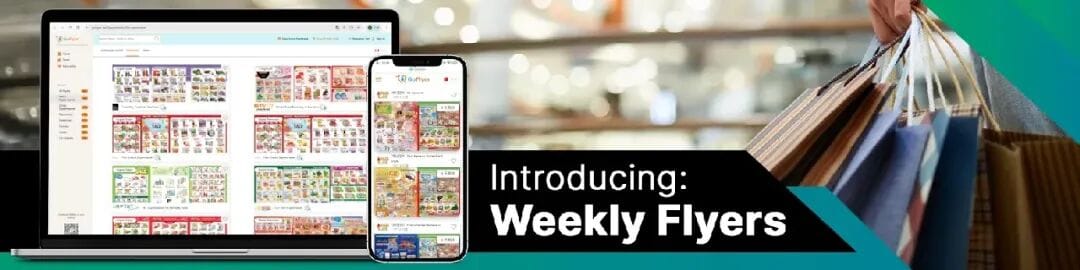
To be honest, when some people first see GoFlyer, their first reaction may be:
“So it is just putting flyers online and on mobile.”
But what we are really studying is not only the flyer itself.
It is the data behind the flyer.
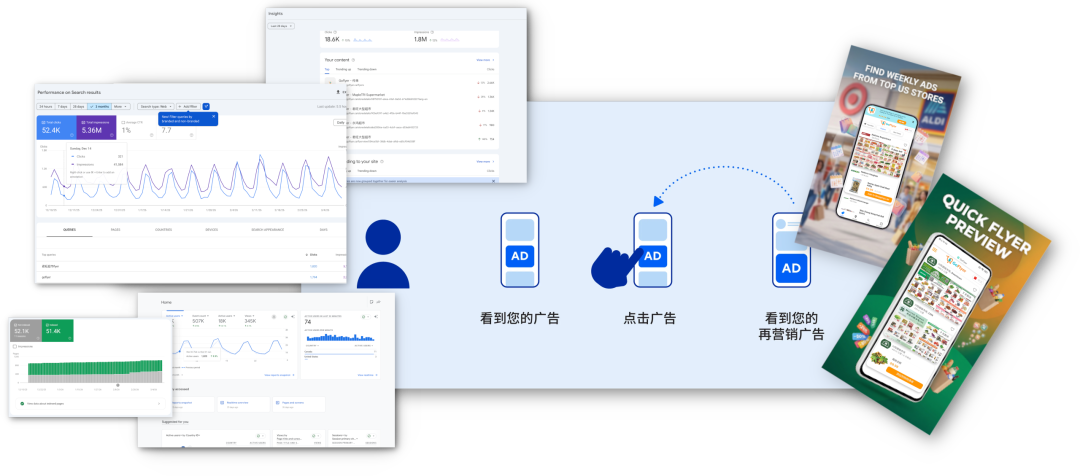
Every click, every product view, every saved item, every shopping list action — these may look small on their own. But over time, they can tell us something extremely valuable.
Which products truly attract Chinese and Asian consumers?Which price points are most competitive?Which items perform differently in Markham, Scarborough, Mississauga, or Richmond Hill?Which categories start to move before certain cultural festivals or holiday periods?
For any supermarket that wants to build for the long term, this kind of data is not just useful.
It is a strategic asset.
Because the next stage of competition will not only be store versus store.
It will be system versus system.
From Owner-Driven to System-Driven
The small beginnings of Sobeys, Loblaw, and Metro happened more than a century ago.
The butcher delivering meat by wagon in 1907 could not have imagined that his family name would one day become one of Canada’s largest food retailers.
The couple running a tiny Toronto grocery store in 1919 could not have imagined that Loblaw would one day operate thousands of stores.
The independent grocers meeting in Quebec in 1947 could not have imagined that their buying group would become a major public company.
Their scale did not appear overnight.
It was built layer by layer:
One generation laid the foundation.One generation built the organization.One generation created systems.One generation developed data capability.
Today, many Chinese and Asian supermarkets in Canada are standing at a similar turning point.
The most important question may no longer be:
“Can we open a few more stores?”
The more important question may be:
“Can we move from a business that depends on the owner to a business that runs on systems?”
This path will not be fast.
But for the next few decades of ethnic grocery retail — and for the next generation of entrepreneurs — it may be one of the most important steps we have to take.
Coming Next
In the next article, I want to talk about a question many supermarket owners are now asking:
How can ethnic supermarkets enter the real era of data-driven marketing?
Customers are no longer simply waiting for a flyer to arrive at home. Their buying decisions are being influenced everywhere — by digital media, social platforms, search, algorithms, AI recommendations, and mobile behaviour.
Does the traditional flyer still work?Can digital marketing really drive sales?How do we turn traffic into actual store visits and purchases?
Over the years, we have learned many of these lessons the hard way — through real campaigns, real mistakes, real money spent, and real customer behaviour.
Next time, I will share some of those first-hand lessons.
If you are interested in the future of the supermarket industry, or if you would like to discuss real challenges in grocery retail operations, feel free to follow my public account by scanning the QR code below.
Here, we talk about retail, entrepreneurship, long-term thinking, and the future of the supermarket business.
I hope these thoughts and experiences can bring new ideas, new conversations, and new possibilities for all of us.
—Previous Posts—
 Steven Guan
 Steven Guan